Loading…

The white film on chocolate is bloom, not mould, and it is safe to eat. How to tell fat bloom from sugar bloom, why Indian heat causes both, and how to store chocolate properly.

Faaro Editorial
Editor
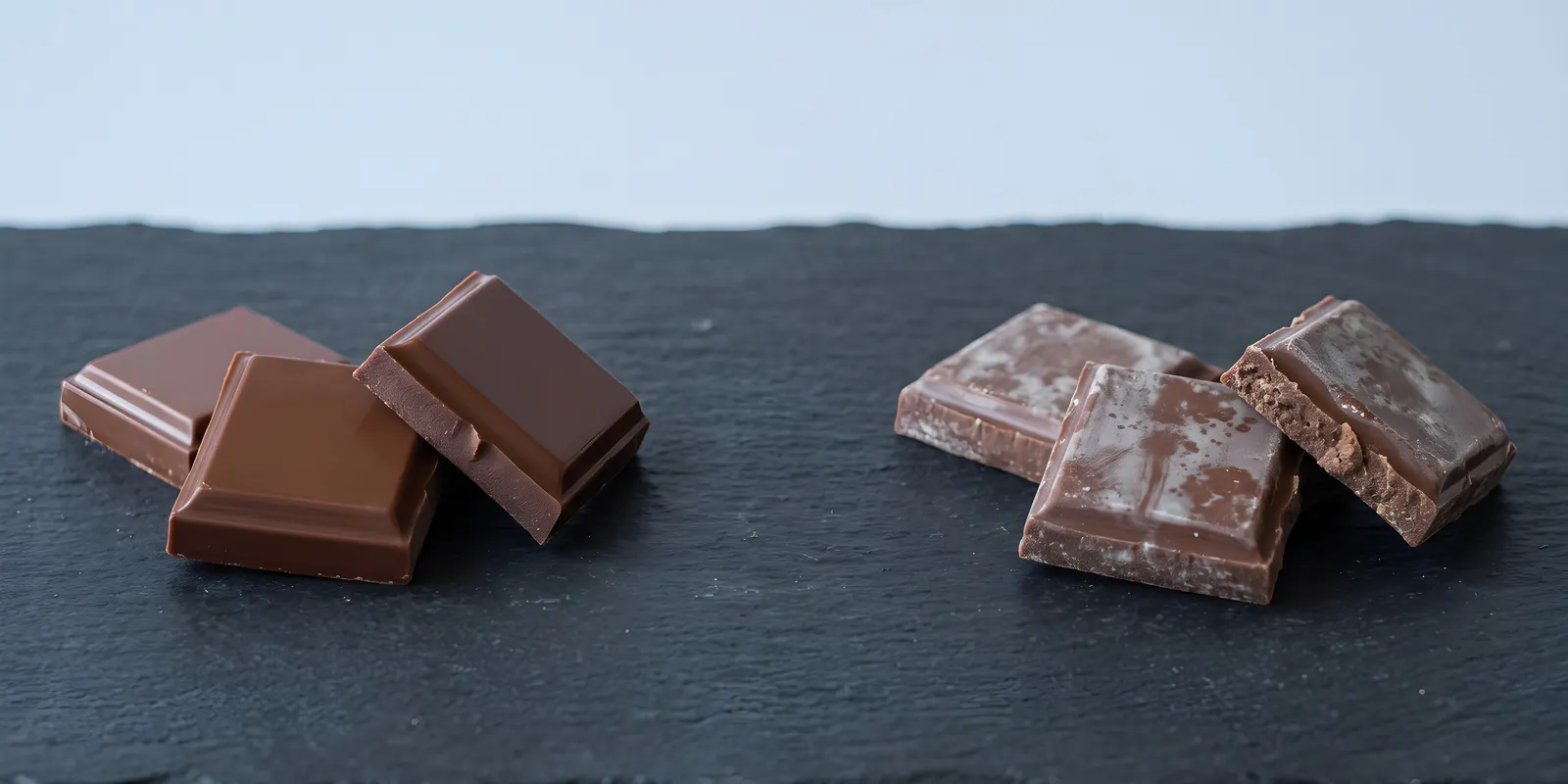
You open a bar you have been saving, and it is wrong. The deep brown has gone chalky and pale, streaked with grey, sometimes dusted with what looks unnervingly like mould. The instinct is to throw it away. Do not throw it away. What you are looking at is almost certainly bloom, it is not spoilage, and it is one of the few problems in a kitchen that is completely harmless.
It is also worth understanding, because bloom is chocolate telling you something true — about how it was made, how it has been kept, and which of the two very different things has gone wrong.
Yes. Bloom is a physical change to the fat or the sugar on the surface of the chocolate, not microbial growth. Chocolate has too little free water for mould or bacteria to establish themselves, which is why a sealed bar keeps for many months at room temperature in the first place.
What bloom does change is the eating. Fat bloom feels slightly soft and greasy and mutes the snap; sugar bloom feels gritty on the tongue. Neither is dangerous, and both disappear entirely if you melt the chocolate — which is why a bloomed bar is perfect for baking, for ganache, for a hot chocolate or for the tart lower down this page.
The one thing bloom is not is mould. Mould on chocolate is fuzzy, three-dimensional and usually coloured — green, blue or black — and appears where a filling or a nut has introduced moisture. Bloom is flat, and it is the same colour as the chocolate underneath, only paler.
There are two distinct kinds of bloom, with two entirely different causes. Telling them apart tells you what went wrong.
Cocoa butter can set into six different crystal structures. Tempering coaxes it into the one called Form V, which is stable, glossy and snaps. Warm the chocolate past its melting point and some of that fat liquefies, migrates to the surface and re-crystallises there in a coarser, less stable form, scattering light instead of reflecting it.
Sugar bloom is a water problem. Moisture condenses on the chocolate's surface, dissolves the sugar it touches, and then evaporates, leaving the sugar behind as visible crystals. Unlike fat bloom, it genuinely changes the texture: the surface becomes rough and sandy.
This is not a problem Indian kitchens have imported from bad luck. It is arithmetic.
Cocoa butter in its stable form melts at about 33.8 °C — a fraction below body temperature, which is precisely the property that makes good chocolate melt on the tongue. It also means that for much of the year, in most of India, the ambient temperature is at or above the point where chocolate begins to give up its structure. A May afternoon in Chennai, Hyderabad or Vijayawada is comfortably above it. So is the inside of a parked car almost anywhere, almost any month.
Compound chocolate, made with palm kernel or other vegetable fats, is far more heat-tolerant, which is exactly why it dominates the value shelf here — and exactly why it does not melt cleanly in the mouth either. That trade-off is the subject of couverture versus compound chocolate.
The monsoon adds the second half of the problem. High humidity plus any temperature swing equals condensation, and condensation on chocolate equals sugar bloom. Between roughly March and October, most of South India is running both risks at once.
The honest answer is: not if you can avoid it, and carefully if you cannot.
A fridge is cold, which helps, and humid, which does not. Chocolate stored uncovered in a fridge absorbs moisture and every smell around it — and cocoa butter is remarkably good at picking up the ghost of last night's fish curry. Worse, every time you take it out, the cold surface pulls condensation straight out of the warm air, which is the direct cause of sugar bloom.
Rotate the way a shop does. Eat the older bar first, keep the newer one sealed, and you will rarely meet bloom at all — most household bloom happens to the bar that has been at the back of the cupboard through a whole summer.
Everything above scales, and at scale the cost of getting it wrong is measured in returns rather than disappointment.
If you are building this into a stocking plan, the shelf-life and rotation maths sits in MOQ, margins and shelf life for retailers, and the wider category view in how to become a chocolate distributor in India.
You cannot polish bloom off a bar — the change has happened in the crystal structure of the fat or in the sugar on the surface, not in a layer sitting on top of it. But you can put the chocolate to work.
Our no-bake hazelnut chocolate tart is a good destination for a bar that has gone grey — everything gets melted anyway.
There is a small consolation in a bloomed bar: fat bloom is, in a roundabout way, evidence that you bought real chocolate. It happens because there is cocoa butter in there to migrate. A bar that shrugs off a hot week without a mark is usually one whose fat was chosen for exactly that stability — and stability of that kind is bought at the cost of the melt.
That is not a reason to be careless with storage. It is a reason to buy from somewhere the stock moves quickly and is kept properly, and to check what the label says the fat is. Our chocolate is made with cocoa butter at our own facility in Kannur, Kerala, and the full ingredient list is on every pack — the reasoning is in couverture versus compound.
Because of bloom. Fat bloom happens when cocoa butter melts and re-crystallises on the surface in a coarser form after the chocolate has been too warm, leaving grey streaks and a dulled finish. Sugar bloom happens when moisture — usually condensation — dissolves surface sugar, which then recrystallises as a dry, gritty white film. Neither is mould, and both are safe to eat.
Yes. Bloom is a physical change in the fat or the sugar at the surface, not spoilage or microbial growth. Chocolate contains too little free water for mould or bacteria to grow. Bloomed chocolate looks unappetising and can feel greasy or gritty, but it is completely safe, and melting it removes the bloom entirely.
Fat bloom appears as uneven greyish streaks or marbling with a smooth, slightly greasy feel, and is caused by heat or by fat migrating out of a filling. Sugar bloom appears as an even, dusty white film that feels dry and gritty, and is caused by moisture — typically condensation when cold chocolate meets warm humid air. Fat bloom is a temperature problem; sugar bloom is a humidity problem.
Only if the room is consistently above about 25 °C, and only in an airtight container. A fridge is humid and full of odours, both of which chocolate absorbs, and taking cold chocolate into warm air causes the condensation that produces sugar bloom. A cool, dry, dark cupboard at 15–18 °C is better wherever one is available. If you do refrigerate, let the sealed container reach room temperature before opening it.
The stable crystal form of cocoa butter melts at about 33.8 °C, just below human body temperature, which is why real chocolate melts on the tongue. It begins softening and losing its structure well before that, from the mid-twenties upward. Compound chocolate made with vegetable fat has a higher melting point and resists heat better, but does not melt as cleanly in the mouth.
Yes, and it is the best use for it. Melting redistributes the fat and dissolves the recrystallised sugar, so bloom disappears completely and has no effect on the finished dish. Use it for ganache, brownies, sauce, hot chocolate or a no-bake tart filling. If you need it to set glossy again as a coating, re-temper it after melting.
Bloom is not a fault to be ashamed of and not a reason to bin a bar. It is a record of what the chocolate has been through — and once you can read which kind you are looking at, it tells you exactly what to change.
Share this article
From The Range
Keep Reading
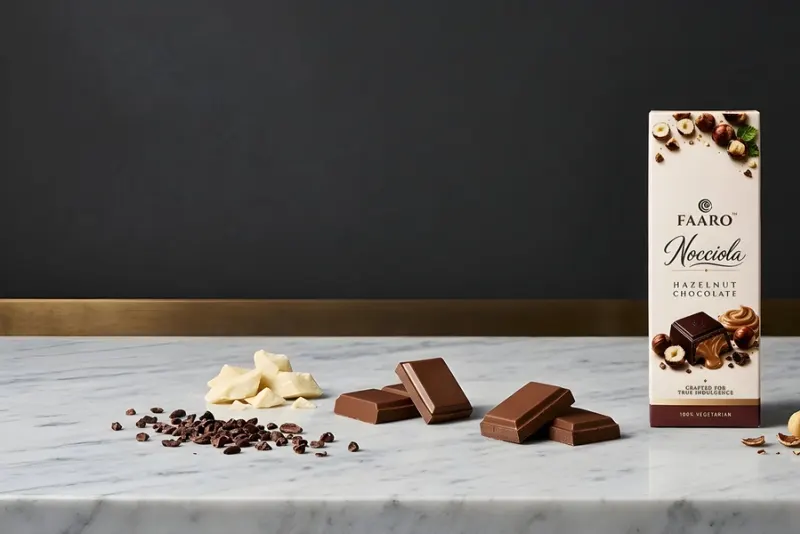
Couverture uses cocoa butter; compound uses vegetable fat. What FSSAI actually requires, six ways to tell the two apart on an Indian shelf, and how to read a chocolate label.
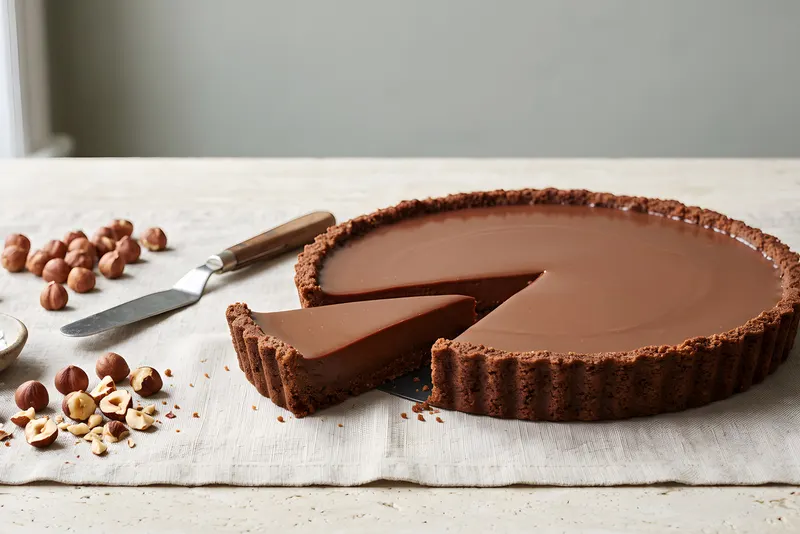
A no-oven chocolate hazelnut tart that sets in the fridge — written for Indian 25% fresh cream, with the ganache ratio, the fixes for a split filling and make-ahead notes.
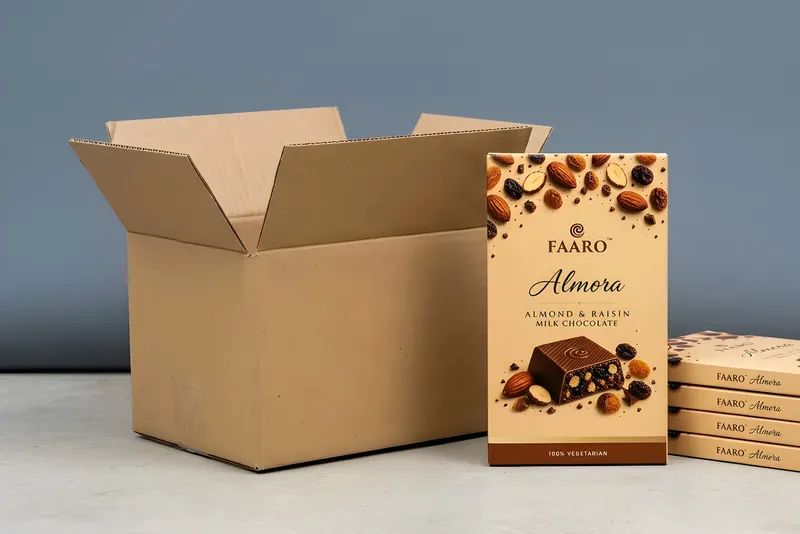
The three numbers that decide whether stocking chocolate makes you money: MOQ, margin and shelf life. A practical retailer's guide for South India — with Faaro as your supplier.
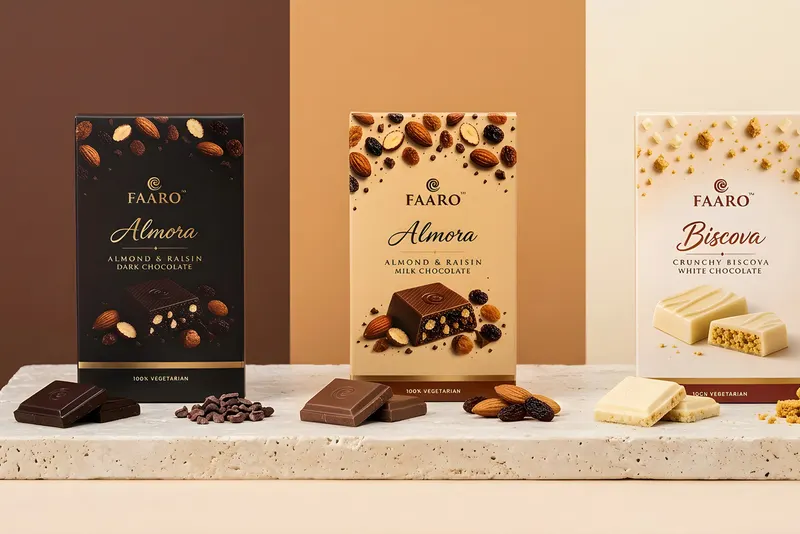
Milk, white and dark chocolate explained in plain language — what really separates them, what each tastes like, and how to choose the right one for your palate or your gift.