Loading…

Couverture uses cocoa butter; compound uses vegetable fat. What FSSAI actually requires, six ways to tell the two apart on an Indian shelf, and how to read a chocolate label.

Faaro Editorial
Editor
Pick up almost any chocolate in an Indian supermarket and turn it over. Somewhere in the small print you will find one of two things: cocoa butter, or a phrase like vegetable fat, hydrogenated vegetable oil or palm kernel oil. That single line is the difference between couverture chocolate and compound chocolate, and it decides almost everything else about the bar — how it snaps, how it melts, how it tastes, how long it keeps and what it costs.
Most shoppers have never been told this, because the front of a pack is under no obligation to say it. This guide fixes that. It explains what couverture chocolate actually is under India's own food regulations, what compound chocolate is, the six tests you can run on a bar without any equipment, and how to read an Indian chocolate label properly.
Couverture — from the French couvrir, to cover — is the trade name for chocolate with a high proportion of cocoa butter, originally made for chocolatiers who needed something fluid enough to coat a filling in a thin, even shell. Two things define it: the fat in it is cocoa butter and nothing else, and there is a lot of it.
Cocoa butter is the pale, hard fat pressed out of the cocoa bean. It is the most expensive part of the bean by a wide margin, which is the entire reason cheaper alternatives exist. It is also the reason good chocolate behaves the way it does: cocoa butter is a fat with an unusually narrow melting range, solid and brittle at room temperature and completely liquid a few degrees later.
India is one of the countries that writes couverture into law. The Food Safety and Standards (Food Products Standards and Food Additives) Fourth Amendment Regulations, 2017, which took effect on 1 January 2018, revised the chocolate standards and set out ten defined types of chocolate. Couverture is one of them.
The regulations also allow vegetable fats other than cocoa butter, but cap them: "the addition of vegetable fats other than cocoa butter shall not exceed 5 per cent of the finished product", and the quantity has to be declared on the label. That 5% ceiling matches the Codex Alimentarius standard for chocolate that most of the world works to. Anything beyond it is no longer chocolate in the regulatory sense.
This is the detail worth carrying into a shop: a product that is mostly vegetable fat cannot legally be sold in India as plain 'chocolate'. It has to be described as something else — which is why you see wording like 'chocolate flavoured', 'compound', 'choco coating' or 'confectionery' on the cheaper end of the shelf.
Compound chocolate is made by taking cocoa powder — the defatted solids left after the cocoa butter has been pressed out — and blending it back with a different fat entirely, usually a cocoa butter substitute made from palm kernel oil, coconut oil or hydrogenated vegetable oils, plus sugar and milk solids.
It exists for three good commercial reasons, and it is worth being fair about them. It is substantially cheaper, because cocoa butter is sold at a premium while cocoa powder is the by-product. It needs no tempering, so a small bakery can melt it, dip a cake in it and have it set glossy without any equipment or skill. And it is far more tolerant of heat, which matters enormously in a country where a delivery van in Chennai in May is effectively an oven.
Those three advantages are why compound dominates the value end of the Indian market, why most birthday-cake coatings and bakery drips are compound, and why a lot of what people think of as the taste of chocolate in India is actually the taste of palm kernel fat carrying cocoa powder.
You do not need a lab. Cocoa butter behaves so distinctively that a bar gives itself away in about thirty seconds.
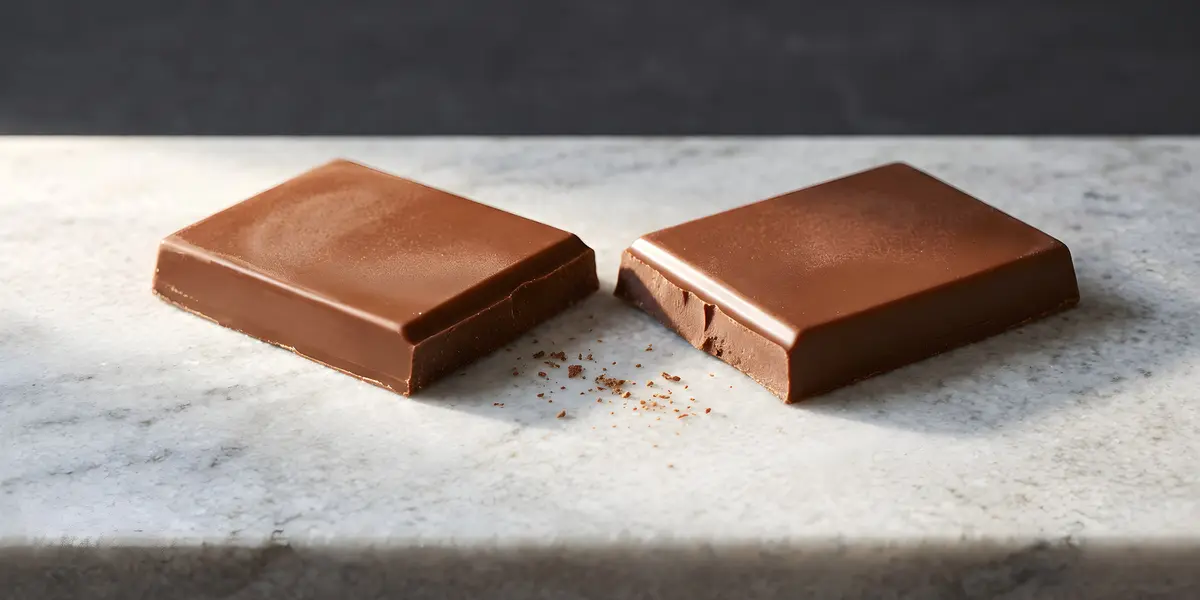
A cocoa bean is roughly half fat. Pressing the nib separates it into cocoa butter and a dry press cake that becomes cocoa powder. Cocoa butter has a long list of well-paying buyers outside the chocolate business — it is prized in cosmetics and pharmaceuticals — so its price runs well ahead of cocoa powder's. Making chocolate the way couverture requires means buying back a great deal of the expensive half.
This is also the honest explanation for a question shoppers reasonably ask: why is a 56 g bar of good chocolate priced like it is, when a 100 g bar of something similar-looking is a third of the price? The answer is almost never the packaging. It is the fat. India's premium chocolate segment has been growing for exactly this reason — industry estimates put the premium slice of the Indian market at over USD 1.2 billion in 2025 and rising through the 2030s, as more shoppers work out what they were previously paying for.
Cocoa butter is polymorphic: it can set into six different crystal structures, numbered I to VI, and only one of them is any good. Form V melts at roughly 33.8 °C — just under body temperature — and it is the form that gives chocolate its gloss, its snap and its resistance to going grey. Getting cocoa butter to set in Form V means tempering: melting the chocolate, cooling it through a specific window to seed the right crystals, then warming it slightly to melt off the wrong ones.
Get it wrong and the chocolate sets soft, dull and prone to blooming. Compound chocolate skips the whole problem, because its vegetable fats are not polymorphic in the same troublesome way — they simply set. That convenience is exactly what you are trading away flavour and mouthfeel to buy.
It is also why the way you store a real bar matters more than people expect. If a couverture bar has gone pale and streaky in your cupboard, that is the cocoa butter announcing itself, and it is worth understanding — we cover it in why chocolate turns white, and how to store real chocolate in Indian heat.
On its own terms, yes — but the more precise answer is that couverture tastes of more. Because cocoa butter melts at body temperature and then leaves, it delivers aroma compounds to the palate and gets out of the way. A vegetable fat with a higher melting point is still coating your tongue while the flavour is trying to register, which blunts it and is what people mean when they say cheaper chocolate tastes 'flat' or 'sweet only'.
This matters most in filled bars, where the chocolate has to melt in step with a soft centre. A pistachio or hazelnut filling is aromatic and yields instantly; a shell that outlives it in the mouth wrecks the balance. It is the reason a filled bar is the format where the difference is hardest to hide.
It matters in pairing too. If you drink your chocolate alongside South Indian filter coffee, a bar that clears the palate lets the coffee's own bitterness come through; a waxy one fights it.
Indian labelling is actually generous to a careful reader, because the composition rules require the awkward facts to be printed somewhere. Four habits will tell you almost everything.
Every Faaro chocolate is made with couverture. The declared ingredient list on the back of each of our bars reads "Chocolate (sugar, cocoa butter, milk solids, cocoa solids, emulsifiers [INS 322(i), INS 476], iodised salt, nature-identical vanilla flavouring)" and then the filling. Cocoa butter is the fat. There is no vegetable fat, no palm kernel oil and no cocoa butter substitute in any bar in the range — not in the milk bars, not in the dark, and not in the white, where cocoa butter is doing all of the work.
We put the whole ingredient list and the nutrition panel on every product page as well as every pack, because the label is the claim. You can check it before you buy rather than after.
You do not have to take our word for the difference. Buy one bar, snap it next to whatever compound-coated sweet is in the house, and run the melt test on both. The waxy film is unmistakable once you have felt it.
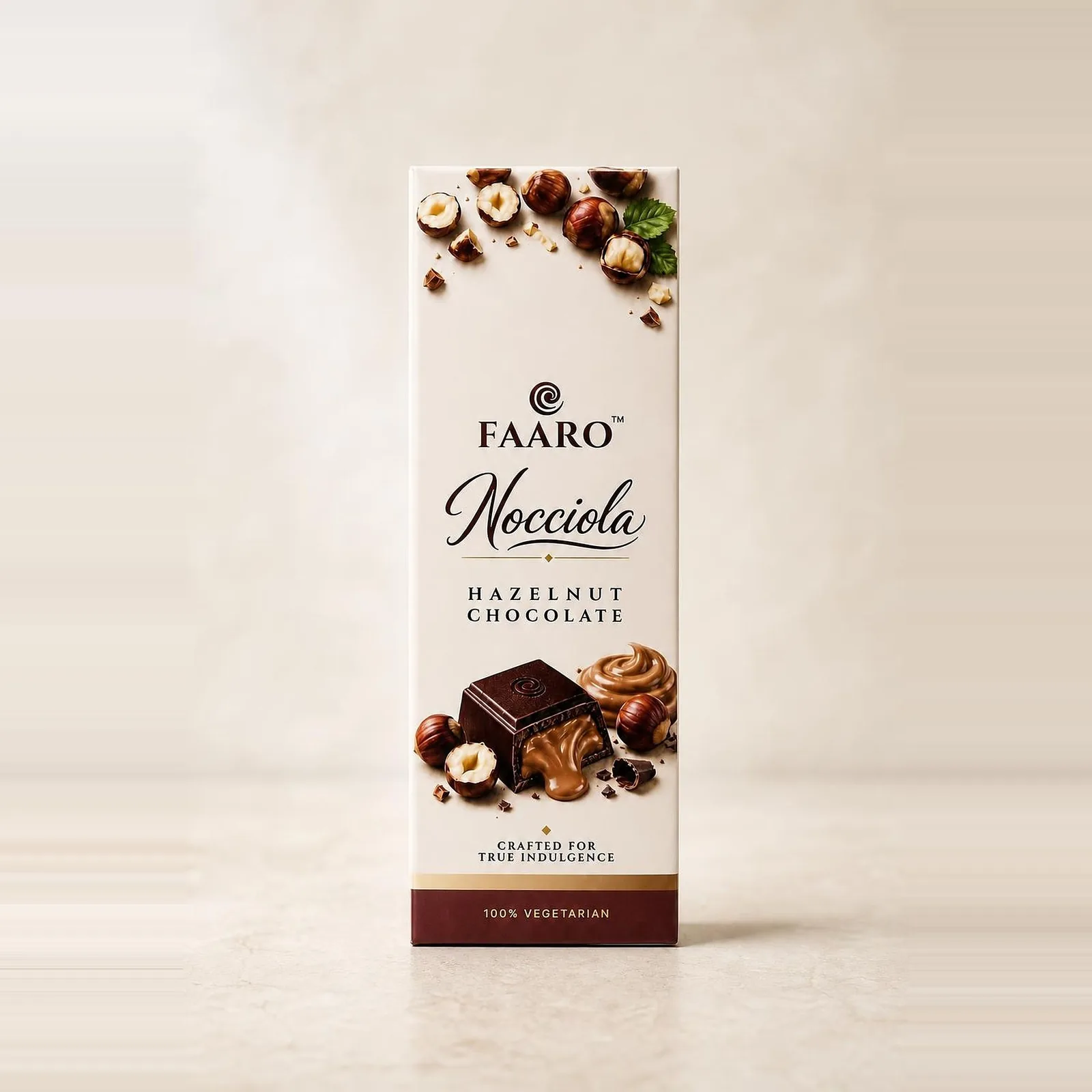
The bar that shows it most clearly is Nocciola, our hazelnut bar: a couverture milk shell around a roasted hazelnut filling, where the shell has to melt at the same rate as the centre or the whole thing falls apart.
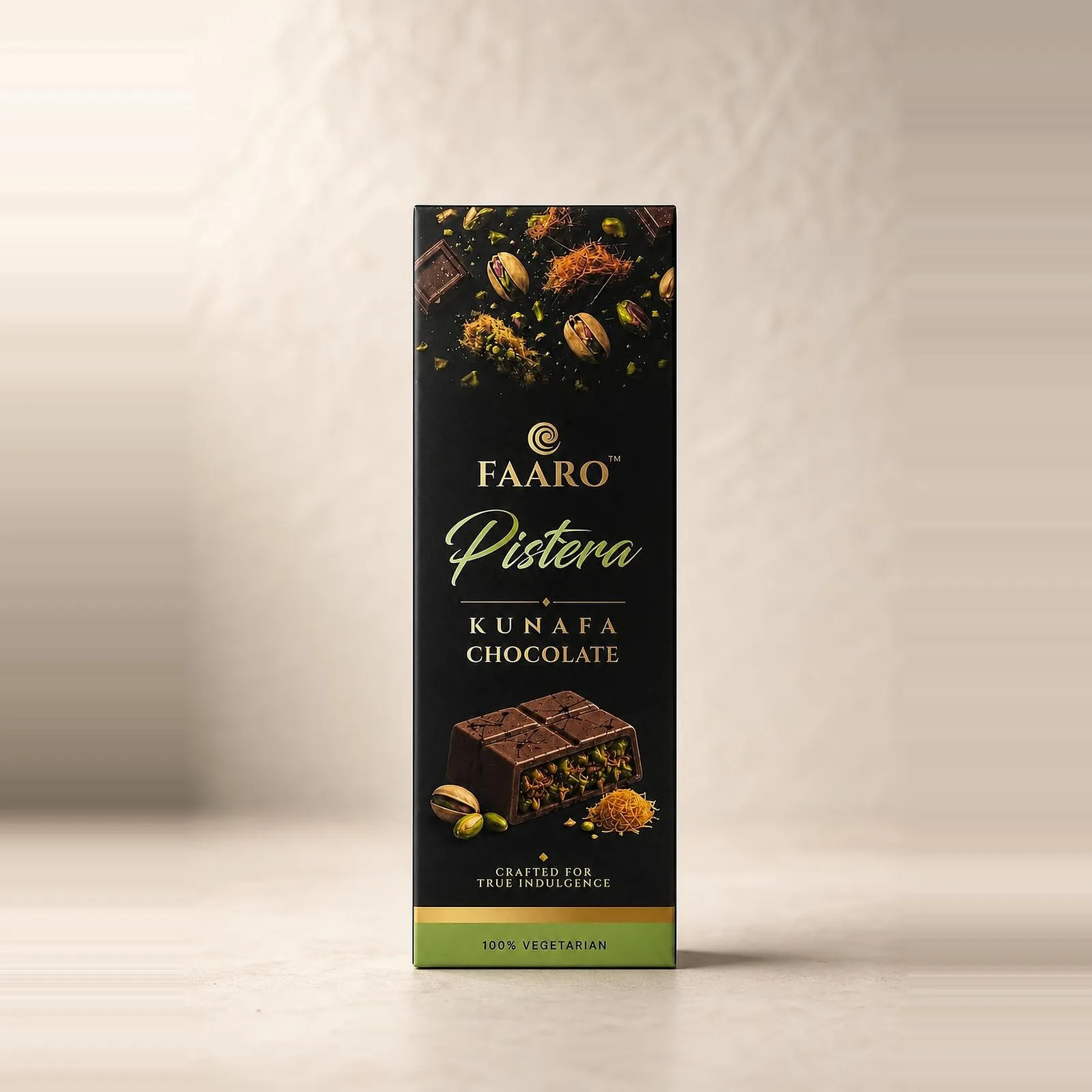
The same is true of Pistera, where a pistachio-and-kunafa filling sits behind a shell thin enough that a compound coating would simply taste of fat. If the format is new to you, start with what Dubai chocolate is and why it went viral, or with our beginner's guide to milk, white and dark.
Couverture is chocolate made with a high proportion of cocoa butter and no substitute fats, originally developed for coating and moulding. Under India's FSSAI standard it must contain at least 35% total cocoa solids, of which at least 31% is cocoa butter and at least 2.5% is fat-free cocoa solids. The high cocoa butter content is what makes it fluid when melted, glossy when set and quick to melt on the tongue.
It depends what 'normal' means. Couverture is a grade of real chocolate, so comparing it with an ordinary bar that also uses cocoa butter is a matter of taste and cocoa content. Compared with compound chocolate, which replaces cocoa butter with vegetable fat, couverture melts more cleanly, snaps harder, carries far more cocoa aroma and leaves no waxy film in the mouth. It also costs more and is less tolerant of heat.
Read the ingredient list. Compound chocolate lists vegetable fat, hydrogenated vegetable oil, palm kernel oil or a cocoa butter substitute, usually high up the list. Physically, compound bends before it breaks, gives a dull rather than glassy fracture, resists melting between your fingers and leaves a waxy coating on the palate. Indian labelling rules also require it to be described as something other than plain chocolate — look for wording like 'chocolate flavoured' or 'compound'.
It is not unsafe, and it is legal and regulated. The nutritional difference is mostly in the type of fat: compound often uses palm kernel oil or hydrogenated oils, where couverture uses cocoa butter. Where compound falls short is sensory rather than medical — less cocoa aroma, a waxy finish and a flatter flavour. If you are choosing chocolate for pleasure rather than for coating a cake, couverture is worth the difference.
Because cocoa butter is the expensive half of the cocoa bean and couverture requires a great deal of it, while compound chocolate uses cheap vegetable fats in its place. Imported couverture adds freight and duty on top. Chocolate made with couverture inside India — as Faaro's is, from our facility in Kannur, Kerala — avoids the import chain, which is why a locally made couverture bar can sit well below the price of an imported one.
Yes. Every bar in the Faaro range is made with couverture, and the declared ingredient list on each pack names cocoa butter as the fat, with no vegetable fat, palm kernel oil or cocoa butter substitute anywhere in the range. The full ingredient list and nutrition panel for each product are printed on the pack and published on its product page.
The next time you are standing in front of a chocolate shelf, you now have a shortcut that works everywhere in India: ignore the front of the pack, find the ingredient list, and look for the words cocoa butter. Everything else on the bar follows from that one line.
Share this article
From The Range
Keep Reading
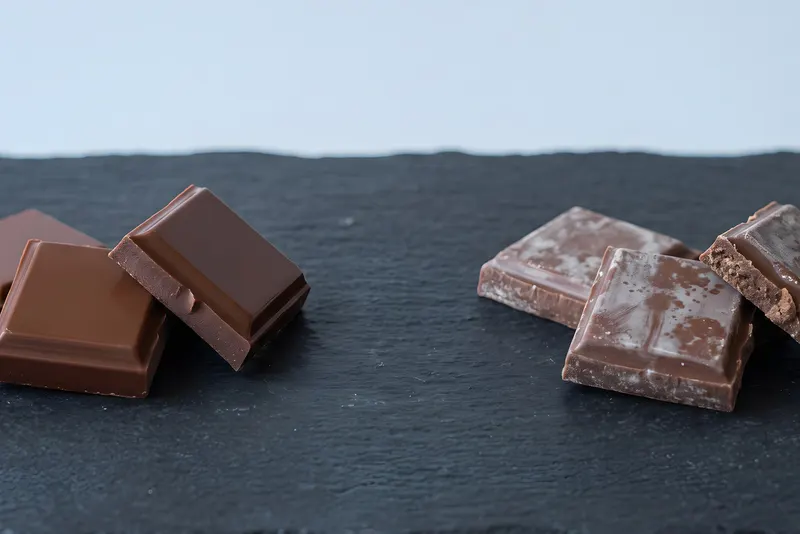
The white film on chocolate is bloom, not mould, and it is safe to eat. How to tell fat bloom from sugar bloom, why Indian heat causes both, and how to store chocolate properly.
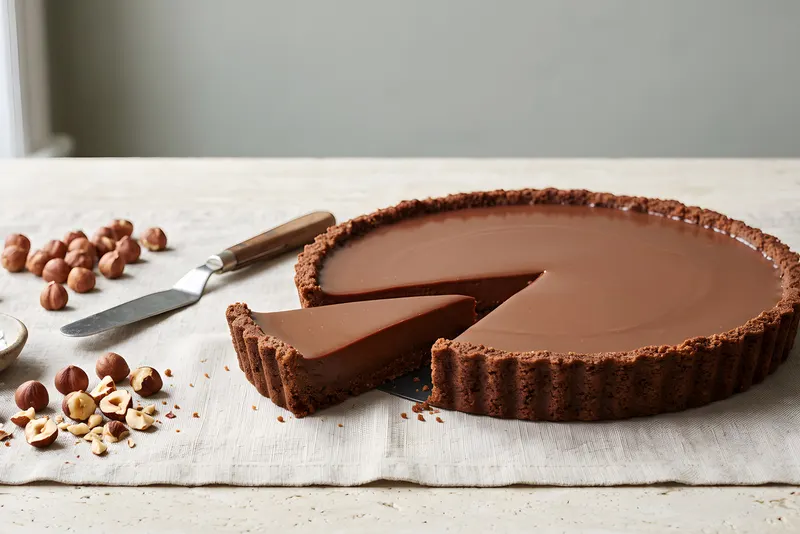
A no-oven chocolate hazelnut tart that sets in the fridge — written for Indian 25% fresh cream, with the ganache ratio, the fixes for a split filling and make-ahead notes.
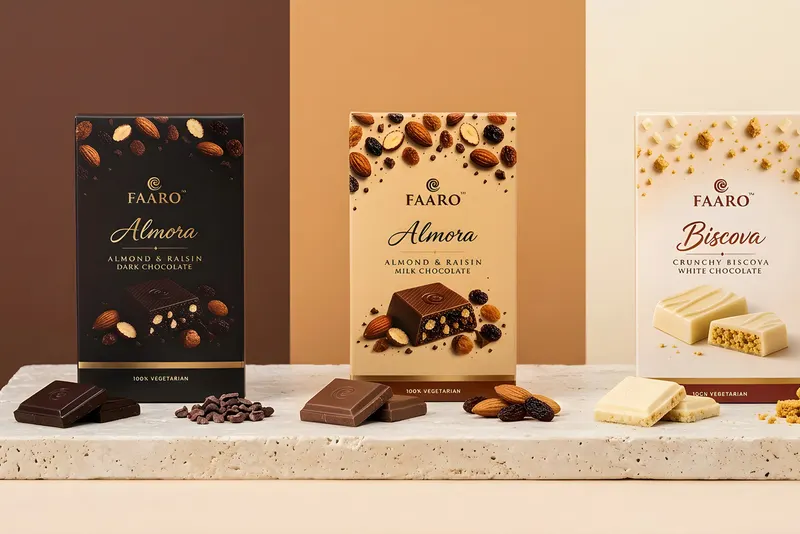
Milk, white and dark chocolate explained in plain language — what really separates them, what each tastes like, and how to choose the right one for your palate or your gift.
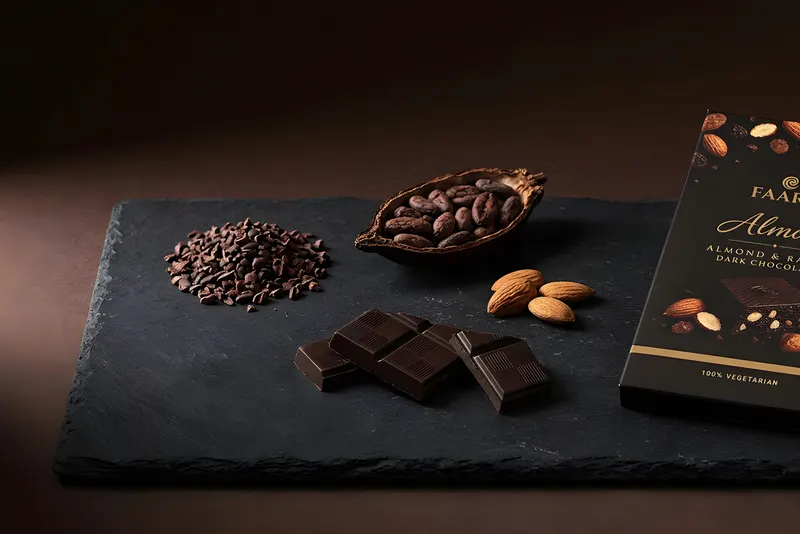
The real science on dark chocolate — genuine benefits, honest caveats, why the type of fat matters, and how to enjoy it the smart way as part of a balanced South Indian diet.