Loading…

The real science on dark chocolate — genuine benefits, honest caveats, why the type of fat matters, and how to enjoy it the smart way as part of a balanced South Indian diet.

Faaro Editorial
Editor

It is the question every health-conscious South Indian snacker eventually asks, usually while reaching for a second square: is dark chocolate actually good for me, or is that just a story we tell ourselves? The honest answer is somewhere in the middle — and the details matter more than the headlines suggest. Let us separate the science from the wishful thinking.
Dark chocolate is chocolate made with a high proportion of cocoa solids and cocoa butter, and little or no milk. The number you see on the wrapper — 55%, 70%, 85% — is the percentage of the bar that comes from the cocoa bean. The higher the percentage, generally the less sugar and the more of the compounds people associate with health benefits. Milk chocolate, by contrast, typically sits around 30 to 40% cocoa with added milk solids and more sugar.
The benefits people talk about come from the cocoa, not the chocolate per se. A 30% cocoa bar drowning in sugar will not do much for you. A 60 to 70%+ bar is where the interesting compounds start to concentrate.
Now the part the wellness influencers tend to skip. Chocolate is still an energy-dense food. Even a good dark bar carries meaningful fat and sugar, and the benefits above are seen with small, regular amounts — a square or two — not half a bar in one sitting. The flavanol content also varies hugely between bars, and most commercial processing reduces it. Dark chocolate is a treat with some genuine upsides, not a health supplement.
The sweet spot is moderation: a small portion of good dark chocolate, enjoyed regularly, fits comfortably into a balanced South Indian diet. The problem is never the square. It is the second, third and fourth square.
There is a South Indian angle here worth dwelling on. We have written at length about why the type of fat in your snacks matters — the difference between honest fats and cheap, repeatedly-heated oils. Real chocolate gets its fat from cocoa butter, a naturally stable fat, rather than the refined palm or hydrogenated oils that pad out cheap confectionery. Reading the ingredient list of a chocolate bar is exactly as important as reading it on a packet of chips.
Avoid bars listing 'cocoa butter substitute', 'vegetable fat' or hydrogenated oils high in the ingredients. Real chocolate uses cocoa butter. The substitutes are cheaper and lack both the flavour and the nutritional profile.
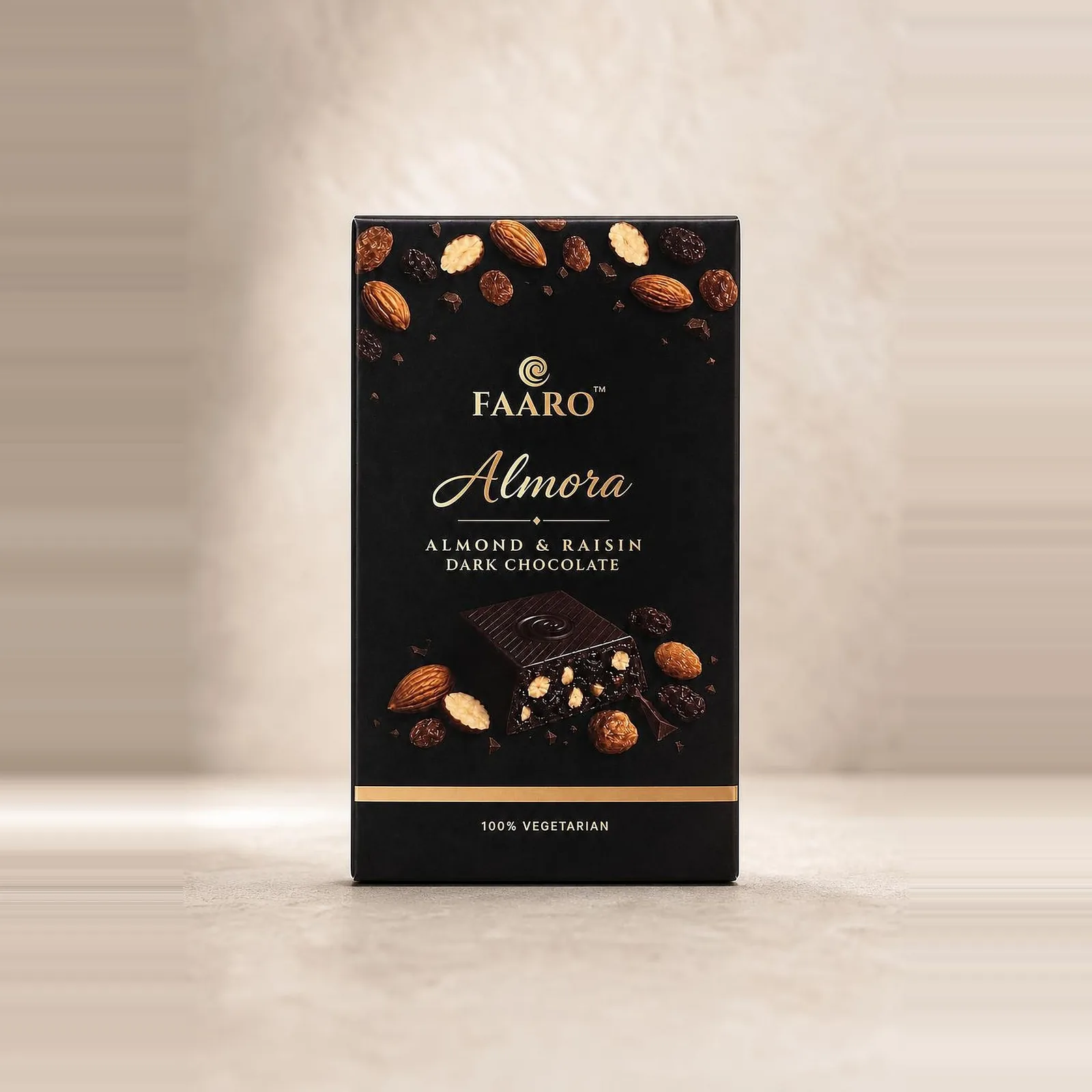
If you want the dark-chocolate experience with a little extra goodness built in, our Almora Dark bar is a good place to start. It pairs rich, intense dark chocolate with roasted almonds and raisins — so alongside the cocoa's benefits you get the healthy fats and vitamin E of almonds and the natural, fibre-rich sweetness of raisins. At 6g of dietary fibre and just 38g of sugar per 100g, it is the least-sweet, most grown-up bar in our range.
The almonds matter for more than flavour. Their protein and fat slow down how quickly the sugar hits your bloodstream, making a nut-studded dark bar a gentler choice than plain milk chocolate — and a far more satisfying one, because you are chewing real nuts, not just sugar.
Dark chocolate, like a well-made traditional snack, is best understood as honest food enjoyed in sensible amounts. It is not a miracle, and it is not a sin. It is one of life's genuinely good small things — and when it is made with real cocoa, real nuts and no shortcuts, you can enjoy it with a clear conscience.
Curious to try the grown-up end of the chocolate spectrum? Explore Almora Dark and the rest of Faaro's range. Free shipping on orders above Rs 499.
Dark chocolate is a better choice than most confectionery, and cocoa flavanols have been linked to cardiovascular markers in research. It is not a health food though: a bar still carries significant sugar and calories, and the benefits described in studies come from small, regular portions of high-cocoa chocolate.
The portions used in most research are modest — on the order of a couple of squares rather than a bar. Treat it as a small daily indulgence with a nutritional upside rather than something to eat more of because it is 'healthy'.
Above 70% is the usual guidance, because more cocoa means more flavanols and proportionally less sugar. Beyond that it becomes a matter of taste — very high percentages are noticeably bitter, and a bar you do not enjoy at a sensible portion is not a useful choice.
Share this article
Keep Reading
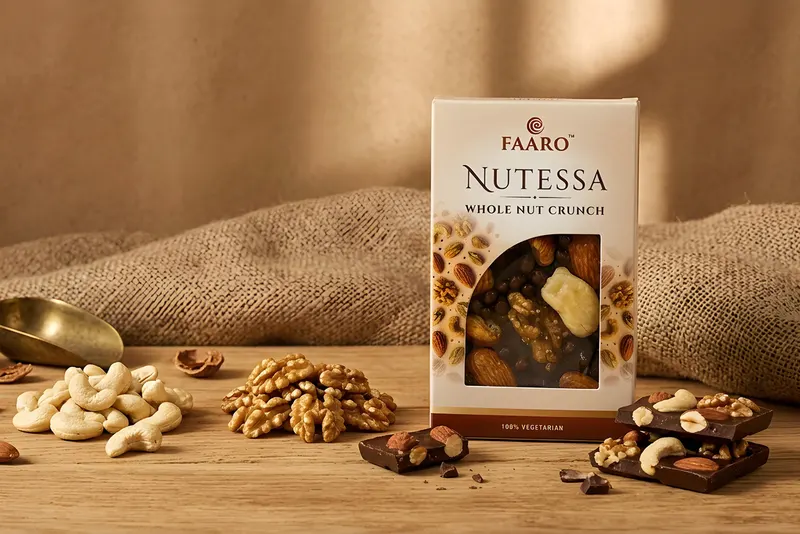
From cashew-crowned payasam to nut-packed chocolate bars — why nut-loaded chocolate feels like home to South Indian palates, and a tour of the nuts (and bars) worth knowing.
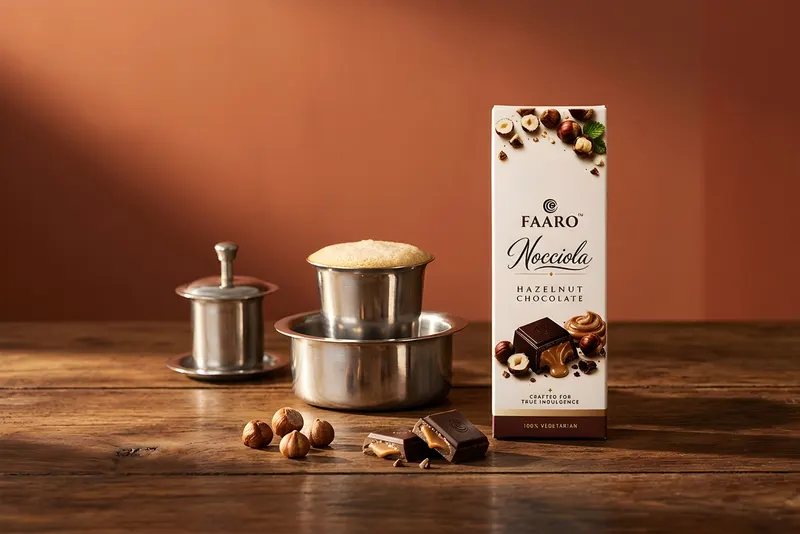
South Indian filter coffee is one of the finest partners chocolate could ask for. A bar-by-bar guide to pairing degree coffee with dark, hazelnut, white and pistachio chocolate.
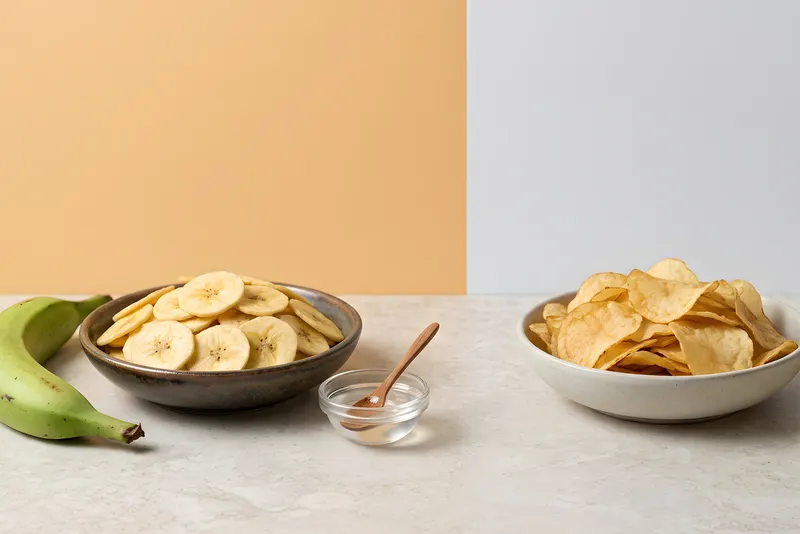
An honest, data-backed comparison of Kerala banana chips and potato chips. We break down the calories, fats, fibre, oils, and ingredients without the marketing fluff.
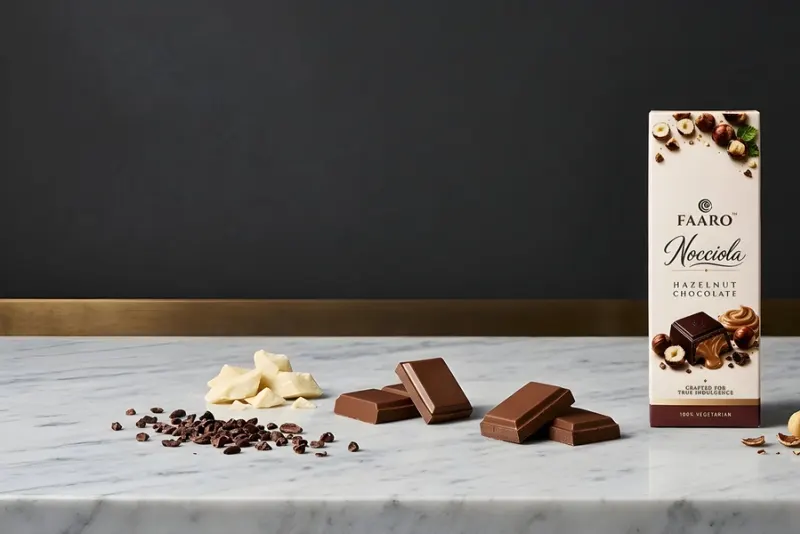
Couverture uses cocoa butter; compound uses vegetable fat. What FSSAI actually requires, six ways to tell the two apart on an Indian shelf, and how to read a chocolate label.