Loading…

An honest, data-backed comparison of Kerala banana chips and potato chips. We break down the calories, fats, fibre, oils, and ingredients without the marketing fluff.

Faaro Editorial
Editor
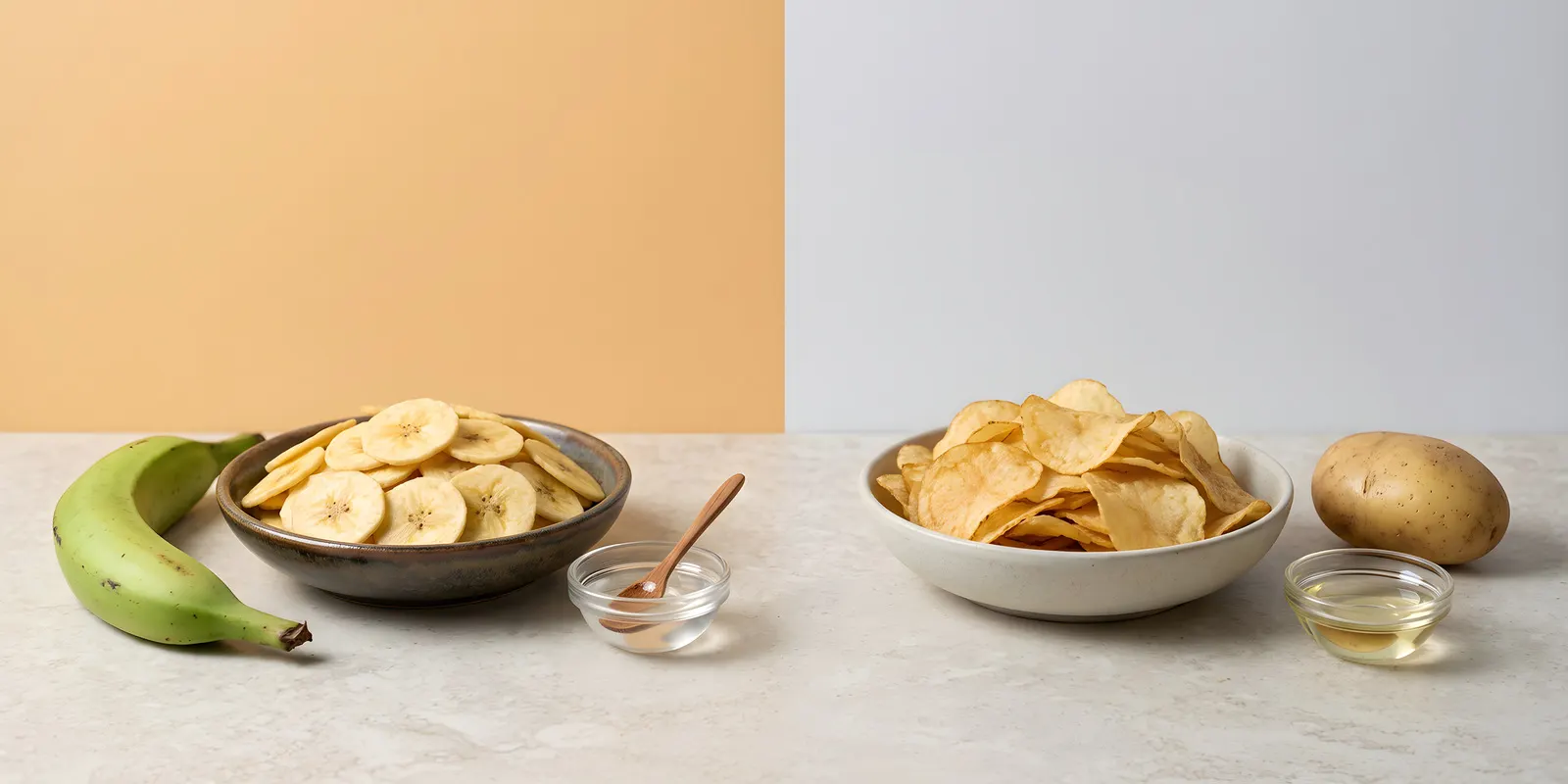
You reach for a bag of chips. But which one? The golden, coconut oil-fried banana chips from Kerala, or the classic salted potato chips you grew up with? It is a question that matters more than you think.
Both are beloved, both are crunchy, and both make excellent companions to your evening chai. But beneath the surface, these two snacks are remarkably different in how they are made, what they contain, and how your body responds to them.
Let us break it down honestly. No exaggerated health claims, no marketing fluff. Just the real numbers and the real differences. If you want the full story of how Kerala banana chips came to be, start with our deep dive into the 2,000-year history of Malabar banana chips.
Let us get the numbers on the table first. Here is how banana chips and potato chips compare per 100 grams, based on USDA nutritional data.
Calories: Banana chips clock in at roughly 519 calories per 100g. Potato chips sit at about 536. The difference? Negligible. Neither is a low-calorie food, and anyone telling you otherwise is not being straight with you.
Fat: Banana chips have about 33g of total fat, while potato chips have 35 to 37g. Close again. But the type of fat is where the story gets interesting, and we will get to that shortly.
Fibre: This is where banana chips pull ahead. At 4 to 7g of dietary fibre per 100g, they offer nearly double what potato chips provide (3.5 to 4.4g). Fibre keeps you fuller for longer and supports digestive health.
Protein: Potato chips win here with 5 to 7g versus banana chips' modest 2 to 2.3g. But let us be honest, nobody eats chips for the protein.
Sodium: Traditional Kerala banana chips, especially homemade ones, use far less salt than commercial potato chips. A typical batch of ethakka upperi might have 6 to 100mg of sodium per 100g, while standard potato chips pack 500 to 640mg. That is a massive difference for anyone watching their salt intake.
These numbers are based on USDA FoodData Central entries for banana chips and plain salted potato chips. Actual values vary by brand, recipe, and preparation method. Always check the label on the specific product you are buying.
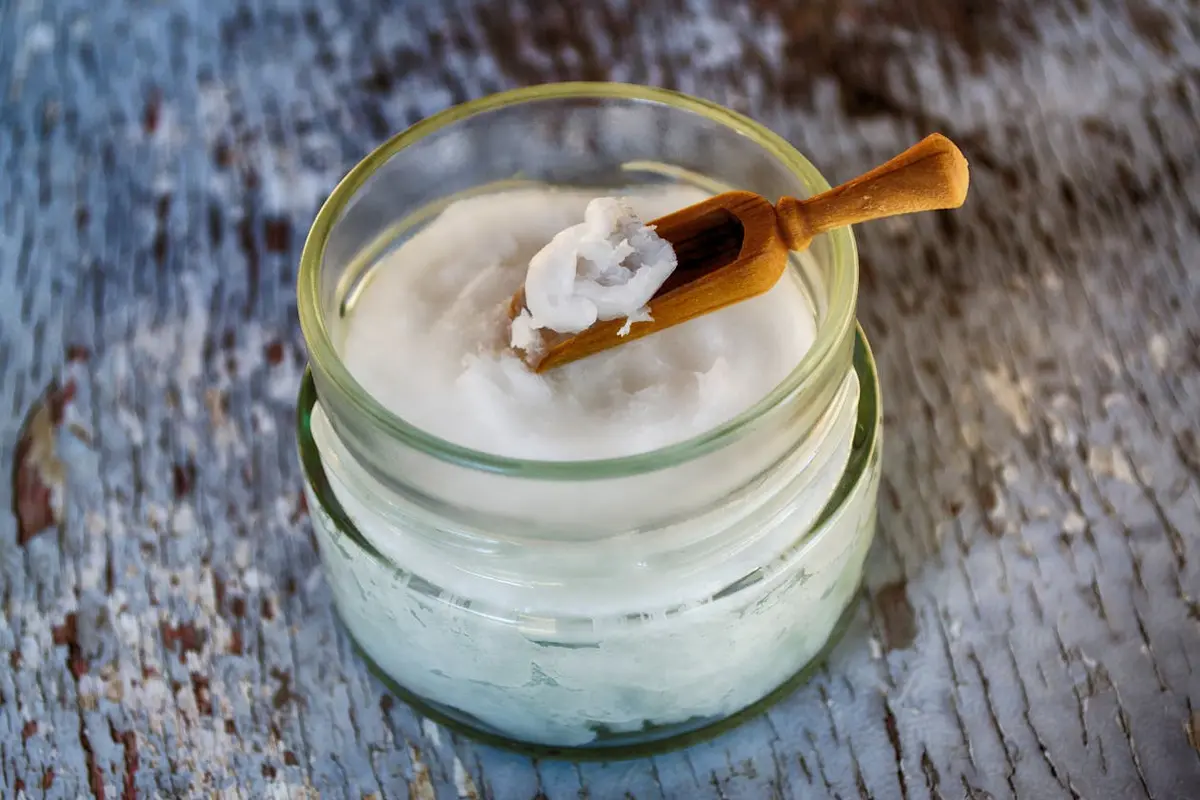
Here is where the comparison gets genuinely interesting. The biggest difference between Kerala banana chips and mass-market potato chips is not the vegetable. It is the oil.
Authentic Malabar banana chips are fried in pure coconut oil, ideally cold-pressed. Most commercial potato chips use refined sunflower oil, canola oil, or blended vegetable oils. This single difference changes everything about the snack.
Oxidative stability: Coconut oil is roughly 82% saturated fatty acids, which makes it remarkably resistant to oxidation when heated. A study published in Food Chemistry found that coconut oil produces significantly fewer harmful aldehydes during frying compared to sunflower oil. Those aldehydes are linked to inflammation and cellular damage. In plain language: coconut oil stays more stable and produces fewer harmful byproducts when you fry with it.
Zero trans fats: Because coconut oil has very little unsaturated fat, it does not undergo the partial hydrogenation that creates trans fats during frying. Traditional Kerala banana chips have always been trans-fat free, long before it became a marketing buzzword.
MCTs (Medium Chain Triglycerides): Coconut oil contains about 54 to 62% medium-chain fatty acids, including lauric acid (roughly 47 to 49% of its composition). MCTs are metabolised differently from long-chain fats. They are absorbed more quickly and are less likely to be stored as body fat. However, there is genuine scientific debate about whether lauric acid fully behaves as an MCT, so we will not overclaim here.
We should address the elephant in the room. Coconut oil is high in saturated fat, and the American Heart Association has cautioned against excessive saturated fat intake. Banana chips fried in coconut oil contain about 29g of saturated fat per 100g, compared to 3 to 5g in vegetable oil-fried potato chips.
However, the conversation around saturated fat is more nuanced than a single number. Research published in BMJ Open Heart suggests that the saturated fat in coconut oil, primarily lauric acid, raises both LDL and HDL cholesterol and has a different metabolic pathway than saturated fats from animal sources. The science here is evolving.
The bottom line on oil? Neither snack is a health food. But if you are choosing between a chip fried in oxidation-resistant coconut oil with zero trans fats and one fried in refined vegetable oil, the coconut oil option has some genuine advantages.
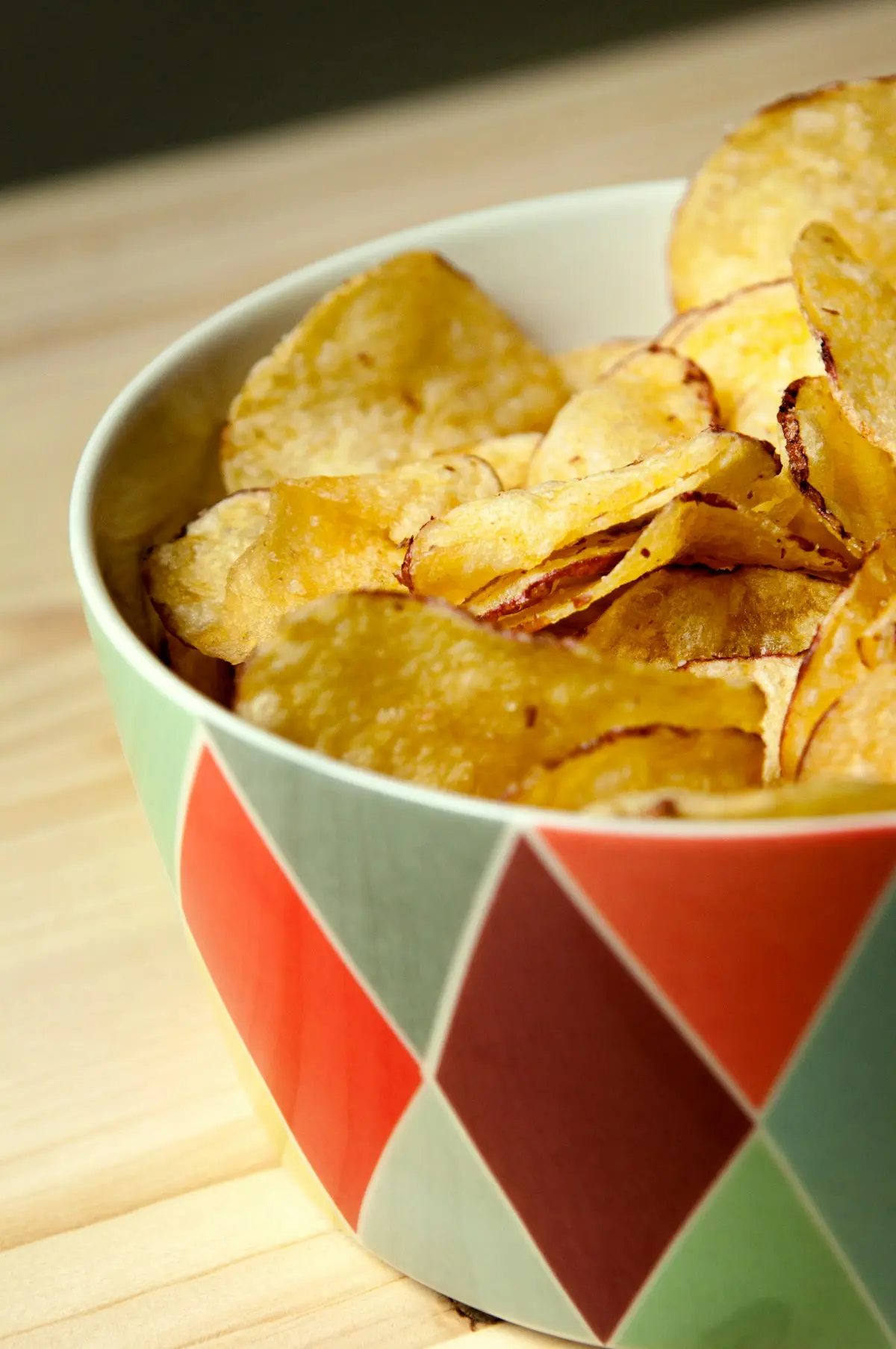
Pick up a bag of mass-market potato chips and read the back. You will typically find: potatoes, vegetable oil (sunflower, palm, or canola), salt, flavour enhancers (MSG or disodium inosinate), maltodextrin, artificial colours, anti-caking agents, and preservatives.
Now read the ingredients on a traditional Kerala banana chip: Nendran banana, coconut oil, turmeric, salt. That is it. Four ingredients. No preservatives, no artificial colours, no flavour enhancers, no refined oils hiding behind the word 'vegetable oil.'
The Nendran banana itself is worth understanding. It is not the soft, sweet banana you eat as a fruit. It is a large, starchy plantain with about 41g of carbohydrates per 100g, which is what gives the chips their signature crunch. We wrote an entire article about why the Nendran banana is irreplaceable in chip-making.
The turmeric in banana chips is not just for colour. It acts as a natural preservative and adds subtle earthy notes. Curcumin, the active compound in turmeric, has well-documented anti-inflammatory properties.
For anyone managing blood sugar, or simply trying to avoid energy crashes after snacking, the glycaemic response matters.
Raw plantains have a glycaemic index of roughly 40 to 55, which is low to medium. Regular potatoes sit at 56 to 89 depending on the variety, which is medium to high. Deep frying lowers the GI of both foods because fat slows gastric emptying, but the plantain's higher resistant starch content gives banana chips a likely edge in glycaemic response.
What does this mean practically? Banana chips are less likely to cause the sharp blood sugar spike and subsequent crash that you might experience with potato chips. You feel steadier, more sustained energy rather than a quick hit followed by sluggishness.
Numbers aside, there is something else that separates these two snacks entirely: the eating experience.
The crunch is different. Banana chips have a denser, more satisfying crunch. Each chip has weight and substance. Potato chips are lighter, airier, and easier to eat mindlessly. You might finish half a bag of potato chips without noticing. Banana chips demand your attention.
The aroma is different. Coconut oil frying gives banana chips an unmistakable fragrance. There is a warmth to it, a nuttiness that refined vegetable oils simply cannot replicate. When someone opens a bag of Kerala banana chips in a room, everyone knows.
The satisfaction is different. Because banana chips are denser and higher in fibre, you tend to eat fewer of them and feel more satisfied. A small bowl with your chai is genuinely enough. Potato chips, by design, are engineered for more-ishness. There is a reason the marketing says you cannot eat just one.
We believe in honesty over marketing. Here is our straight take:
The best snack is not the one with the best marketing. It is the one made with honest ingredients, cooked with care, and eaten with awareness.
At Faaro, we do not pretend banana chips are a superfood. They are a snack, and a delicious one at that. But we do believe that what goes into your snack matters. Every batch we make uses hand-selected Nendran bananas, cold-pressed coconut oil, natural turmeric, and just the right amount of salt. Nothing else.
No preservatives. No refined oils. No artificial anything. Just a 2,000-year-old recipe made the way it has always been made, by people who have been making it for generations.
That is not a health claim. It is a quality promise.
Want to taste the difference for yourself? Our Classic Salted Banana Chips are made with cold-pressed coconut oil and hand-selected Nendran bananas. Free shipping on orders above Rs 499.
Generally yes, though the margin is smaller than marketing suggests. Banana chips typically have a three-ingredient list, more fibre and resistant starch, and are fried in coconut oil. Calorie and fat content per 100g are broadly comparable, so portion size still matters.
Fried banana chips sit in a similar calorie band to potato crisps, because both are starch fried in oil. The nutritional advantage comes from the type of fat, the fibre content and the absence of flavour enhancers rather than from a lower calorie count.
Less sharply than potato chips. Chips made from green Nendran plantain retain resistant starch, which is digested more slowly than the fully gelatinised starch in a potato crisp. They are still a fried starch snack, so portion control remains the main factor.
Share this article
Keep Reading
From ancient Roman frying techniques to Kerala's coconut oil kitchens. discover the rich history, tradition, and craft behind Malabar banana chips.
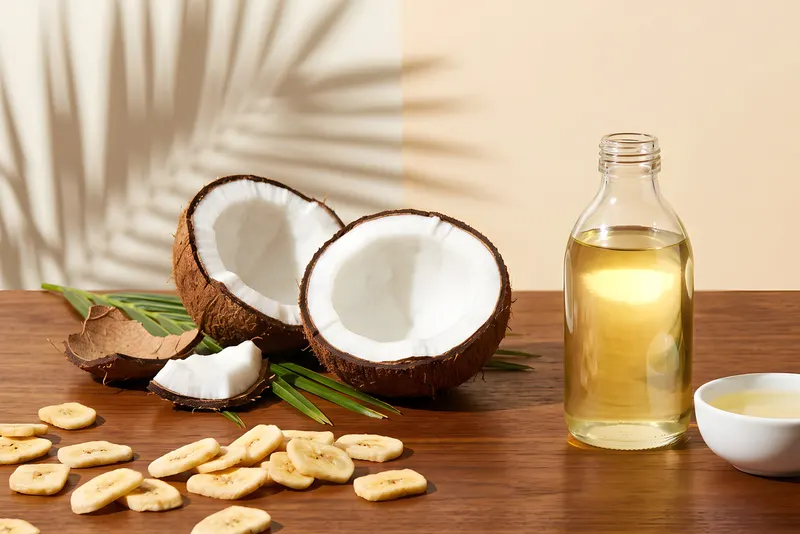
Cold-pressed coconut oil is not just a frying medium in Kerala — it is the soul of every snack. Here is why it matters, what makes it different, and how to spot the real thing.
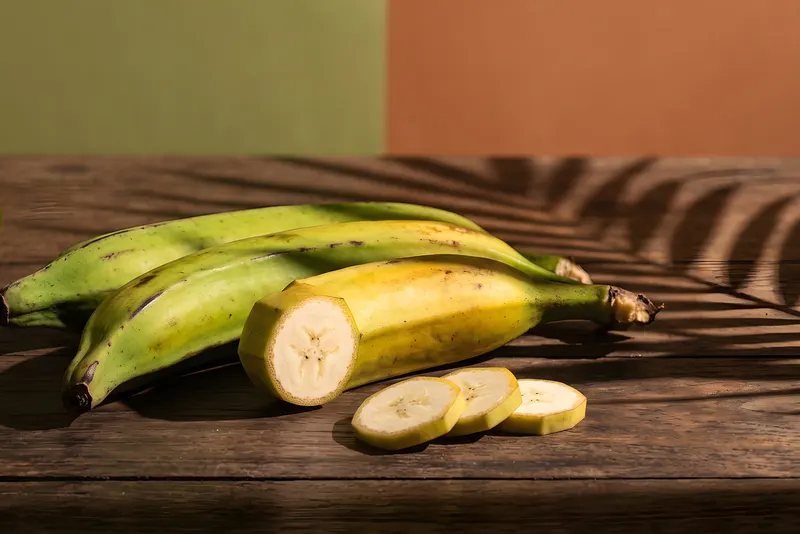
The Nendran banana is not a fruit — it is a cooking ingredient. With 41g of carbs per 100g and unmatched starch content, here is why no other banana can replicate its crunch.
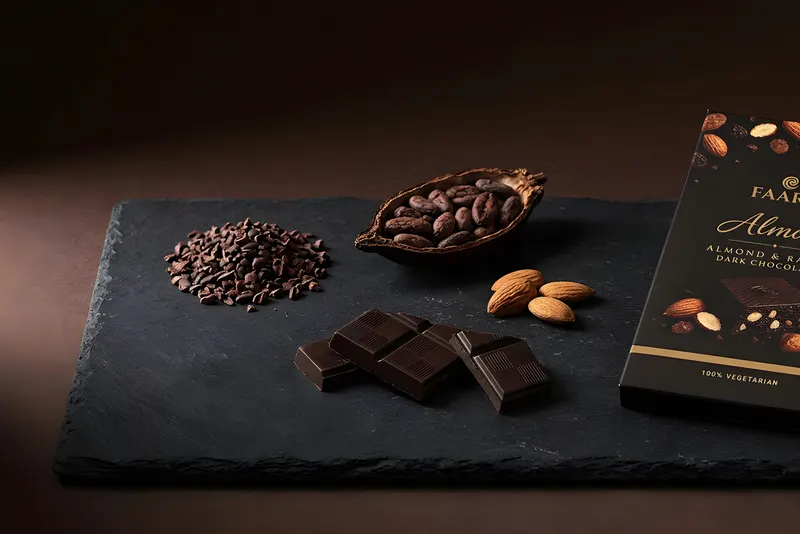
The real science on dark chocolate — genuine benefits, honest caveats, why the type of fat matters, and how to enjoy it the smart way as part of a balanced South Indian diet.