
The Complete Guide to South Indian Snacks: From Murukku to Thattai
A deep dive into South India's iconic snacking tradition. Murukku, mixture, ribbon pakoda, thattai, seedai, and more, with their history, regional variations, and what makes each one special.

Faaro Editorial
Editor
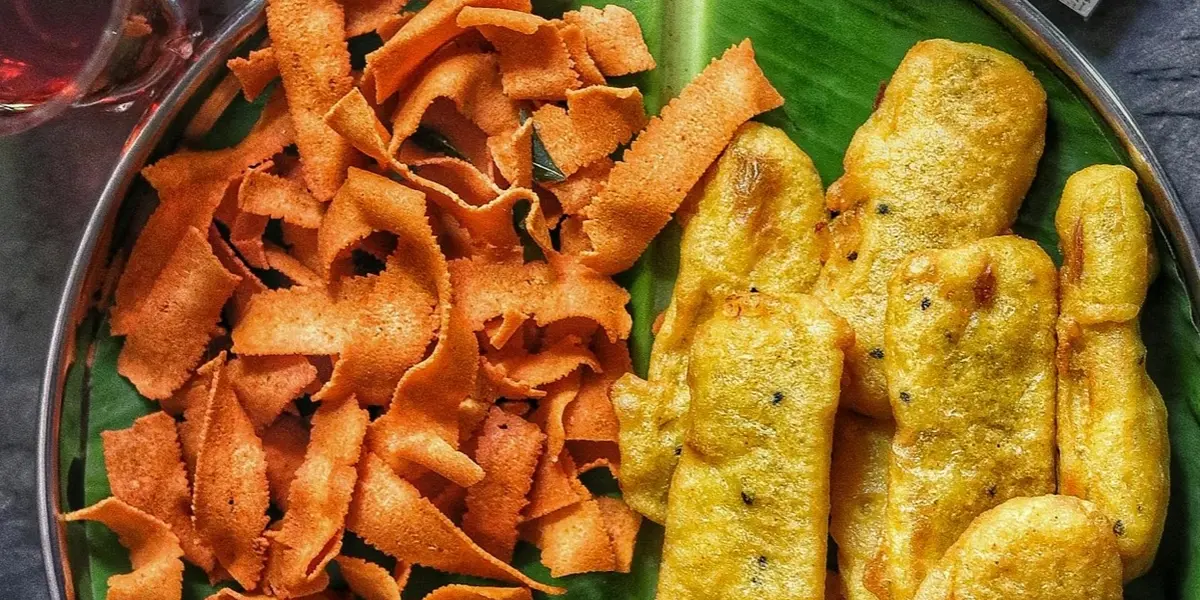
Walk into any South Indian home during Diwali, a wedding, or even a lazy Sunday afternoon, and you will find a steel dabba filled with snacks. Not the plastic-wrapped, factory-made kind. The real kind. Golden, crispy, fragrant things made by hand in kitchens that smell of hot coconut oil and roasted spices.
South India has one of the richest snacking traditions on the planet. Every state, every district, sometimes every family has its own recipes, its own ratios of rice flour to urad dal, its own opinion on whether jaggery belongs in murukku. These are not just snacks. They are edible heirlooms.
This guide is our attempt to map that world. We will walk through the classics, the ones that have survived centuries, the ones your grandmother made, and the ones you can still find in every tea shop from Kanyakumari to Mangalore.
Murukku: The Undisputed King
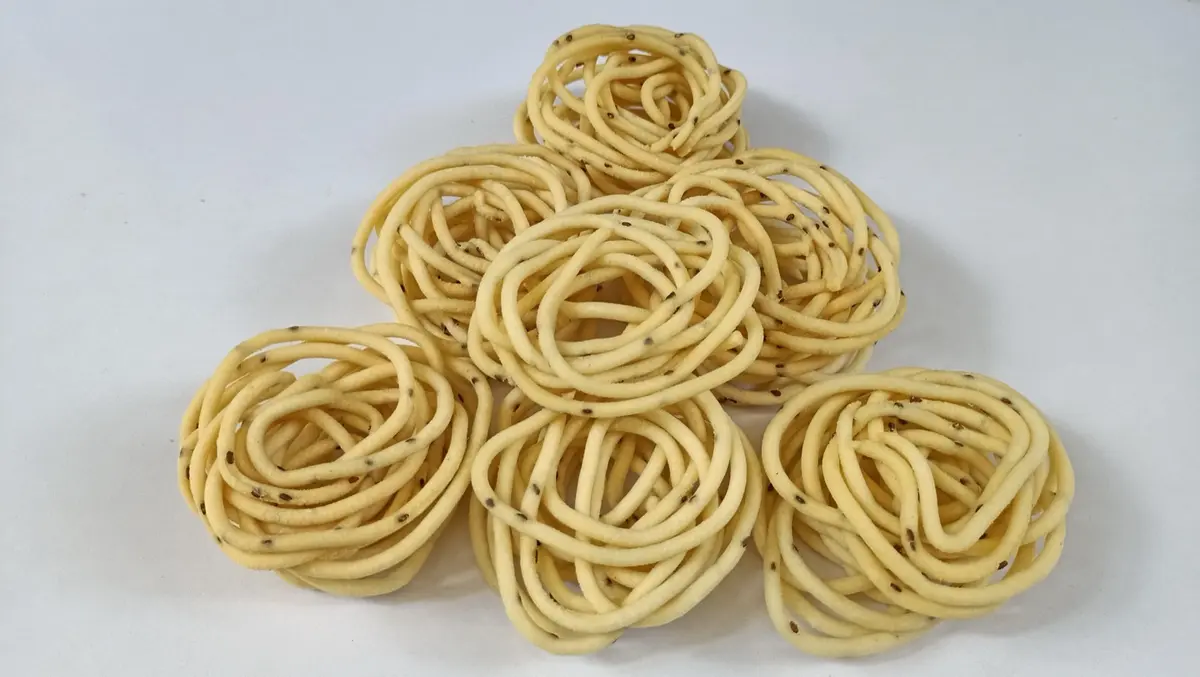
If South Indian snacking had a flag, it would have a murukku on it. The name comes from the Tamil word murukku, meaning twisted, and that tells you everything about its shape. Coils of spiced dough, pressed through a mould and deep-fried until they shatter at the first bite.
The base is deceptively simple. Rice flour and urad dal flour, ground fine, mixed with sesame seeds, cumin, asafoetida, butter, and salt. The dough is pressed through a brass or stainless-steel murukku press, a device that has not changed in design for generations. What comes out is a spiral that hits hot oil and turns golden in minutes.
The Regional Variations
What makes murukku endlessly interesting is how much it changes as you travel across South India.
- Thenkuzhal murukku (Tamil Nadu) is the simplest form. Thin, ring-shaped, made with rice flour and urad dal. Crisp and clean, it is the benchmark against which all others are measured.
- Kai murukku (hand murukku) is shaped by hand rather than pressed through a mould. The result is thicker, more rustic, with an uneven crunch that many prefer to the uniform machine-pressed version.
- Mullu murukku uses a star-shaped nozzle to create a spiky, textured exterior that catches more oil and delivers a richer, more intense crunch. The name means thorn murukku.
- Kerala-style murukku tends to be thicker and uses more coconut oil in the dough itself, not just for frying. Some recipes add grated coconut or coconut milk for a subtle sweetness.
- Chakli (Karnataka and Maharashtra) is the same concept but with a different flour ratio. Chakli often uses more gram flour and sometimes jowar or bajra, giving it a nuttier, earthier flavour.
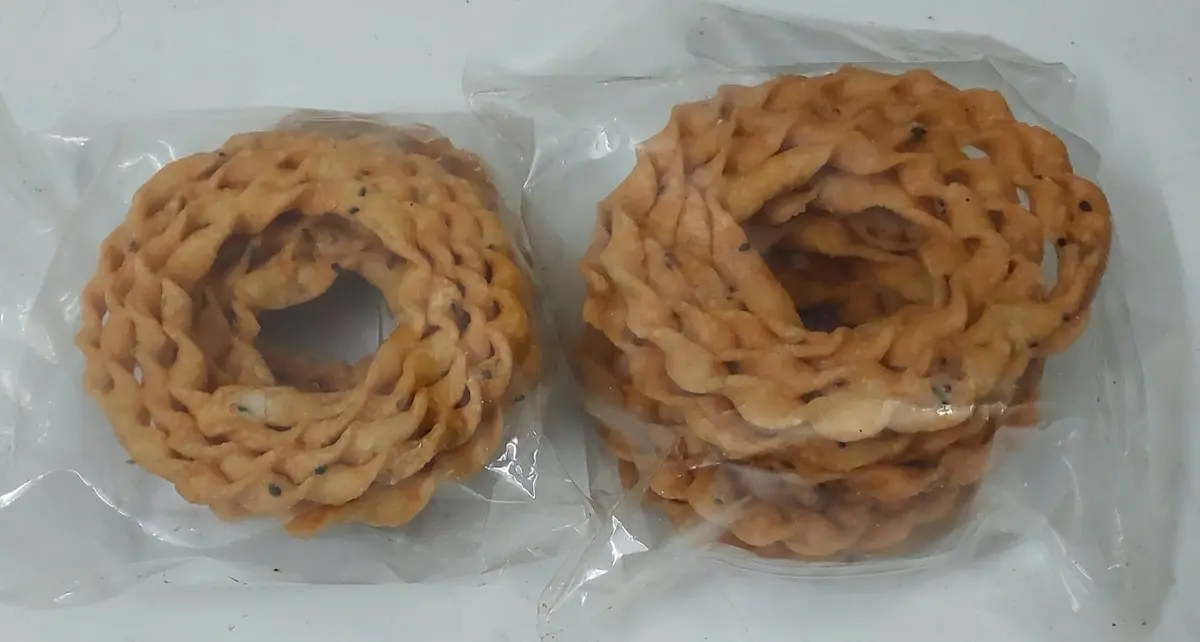
The secret to perfect murukku is the dough consistency. Too wet and it absorbs excess oil. Too dry and it cracks while frying. The dough should be smooth and pliable, like Play-Doh. If it cracks when you press it, add a teaspoon of warm water at a time.
South Indian Mixture: The Art of Controlled Chaos
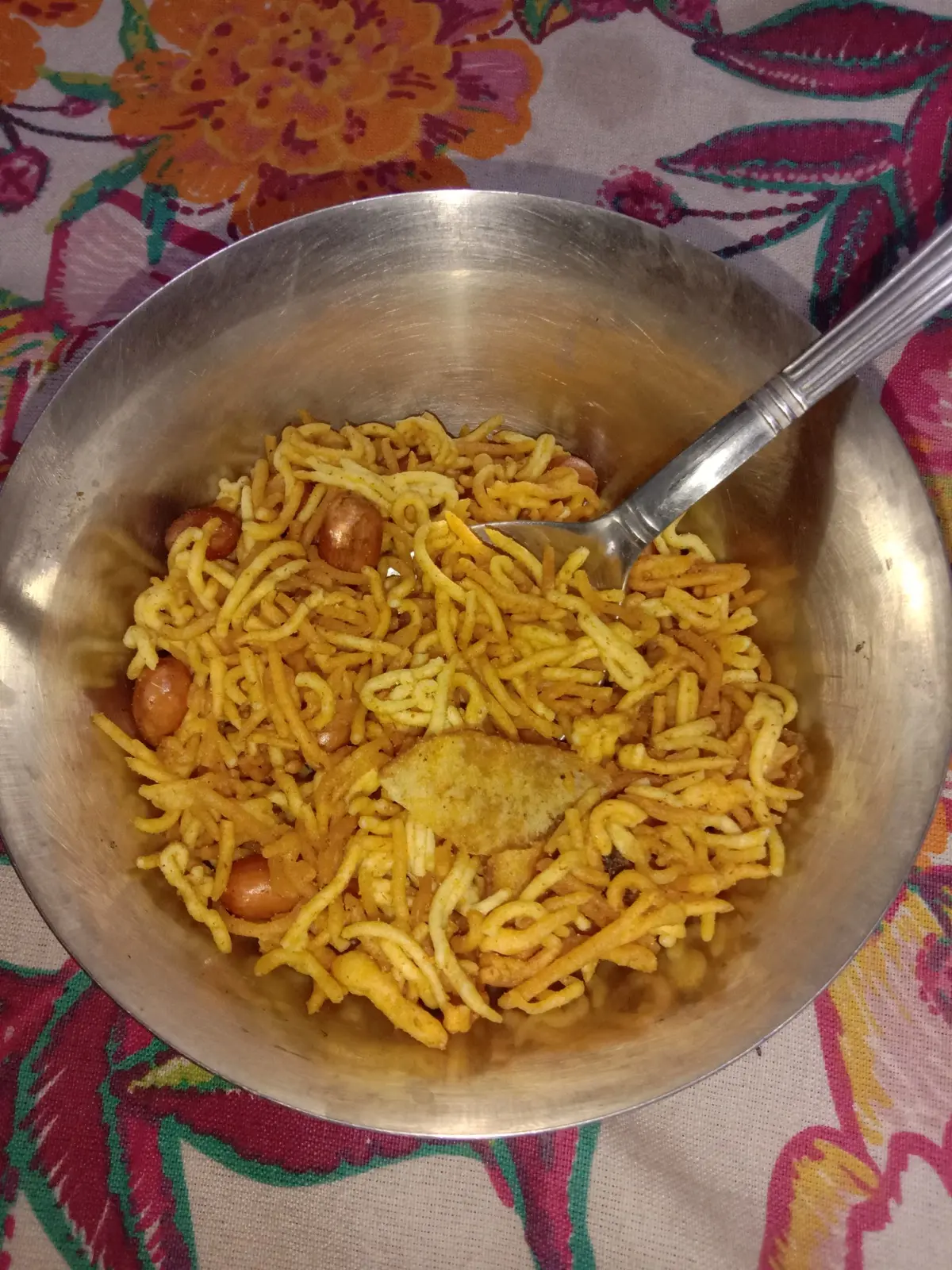
Mixture is not a single snack. It is an ensemble. A carefully calibrated mix of fried lentils, peanuts, sev (thin chickpea flour noodles), curry leaves, dried chillies, and sometimes beaten rice or fried cashews. Every component is fried separately, seasoned individually, and then tossed together at the end.
The genius of mixture is in the contrast. You get the crunch of fried dal, the richness of peanuts, the snap of sev, and the aromatic punch of curry leaves and red chillies, all in a single handful. It is engineering disguised as snacking.
The Famous Variants
- Madras mixture is the gold standard. Chennai's Mylapore neighbourhood is practically synonymous with the snack. It tends to be spicier and includes more varieties of dal than other versions.
- Kerala mixture is often milder, with a greater emphasis on coconut oil flavour and sometimes includes thin banana chips and roasted copra (dried coconut) pieces.
- Hot mixture is the fiery cousin. Doused in red chilli powder and sometimes a hit of citric acid for tang. Your fingers will be stained orange. This is by design.
The best South Indian mixture shops fry each component fresh daily. The curry leaves should be dark green and shatteringly crisp, never limp. If the curry leaves are soft, the mixture is not fresh.
Ribbon Pakoda: The Elegant One
Ribbon pakoda, sometimes called ribbon murukku or ola pakoda, is what happens when you press chickpea flour dough through a flat, ribbon-shaped nozzle into hot oil. The result is a delicate, wavy strip that folds and curls as it fries, creating layers of crunch.
The dough is typically made from besan (gram flour), rice flour, butter, and a precise amount of hot oil mixed into the dry ingredients. This technique, called the hot oil method, is what gives ribbon pakoda its characteristic flakiness. The fat coats the flour particles and creates tiny air pockets during frying.
A well-made ribbon pakoda should be paper-thin, shatteringly crisp, and melt on your tongue within seconds. If you have to chew hard, something went wrong in the dough. The best versions have a faint peppery warmth and a buttery richness that lingers.
Thattai: The Humble Workhorse
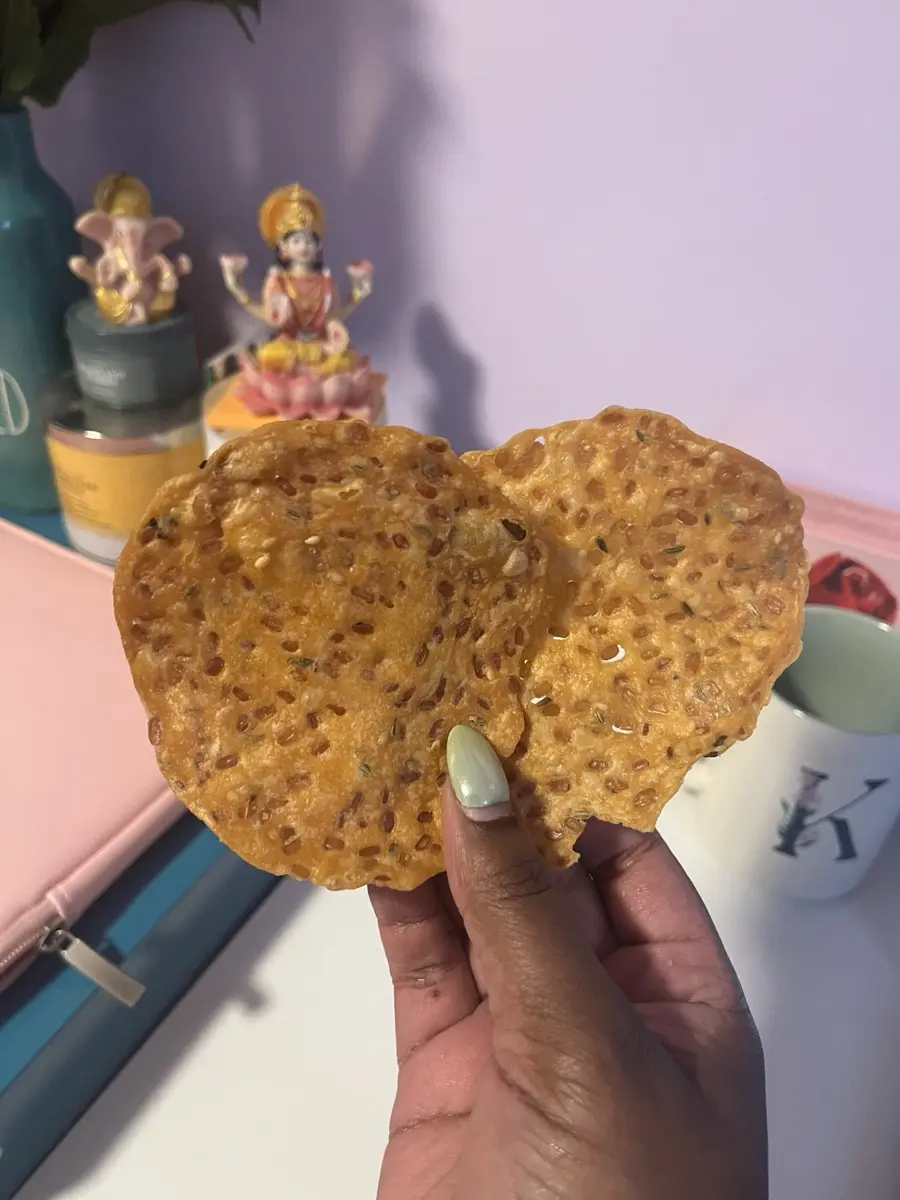
Every South Indian snack dabba has thattai. It is the reliable one, the snack you reach for without thinking. The name comes from the Tamil word thattu, meaning to flatten. And that is exactly what you do. Pat a ball of spiced dough into a flat disc and drop it into hot oil.
The dough is rice flour based, mixed with roasted chana dal, curry leaves, dried chillies, asafoetida, and sesame seeds. Some families add desiccated coconut for sweetness, others add crushed peppercorns for heat. The disc is flattened thin enough to cook through evenly but thick enough to retain a satisfying bite.
- Tamil Nadu thattai is typically thin, crisp, and generously studded with curry leaves and chana dal.
- Nippattu (Karnataka) is the same idea but often uses a mix of flours and tends to be slightly thicker and more robust.
- Chekkalu (Andhra Pradesh and Telangana) is the Telugu cousin. Made with rice flour and sometimes flavoured with carom seeds, it is rolled thinner and crispier than its Tamil counterpart.
Seedai and Uppu Seedai: The Festival Favourites
Seedai are small, round, deep-fried balls made from rice flour and urad dal flour. They come in two personalities: uppu seedai (savoury, with salt and spices) and vella seedai (sweet, with jaggery). Both are essential during Gokulashtami (Krishna Jayanthi), when they are prepared as an offering.
The savoury version is seasoned with sesame seeds, curry leaves, and sometimes grated coconut. The sweet version has a jaggery-coated exterior that caramelises slightly during frying, creating a crackling shell around the soft centre. The duality of seedai, sweet and savoury from the same base dough, captures something essential about South Indian cooking: the belief that flavour is a spectrum, not a binary.
The trick to seedai that puff up perfectly without cracking is to knead the dough while the rice is still warm. Cold dough develops cracks that cause the seedai to burst open during frying.
Banana Chips: Kerala's Gift to the World
No guide to South Indian snacks would be complete without banana chips. Thin slices of raw Nendran banana, fried in coconut oil with a pinch of turmeric and salt. We have written extensively about the 2,000-year history of Malabar banana chips and how they compare nutritionally to potato chips, so we will not repeat ourselves here.
What we will say is this: banana chips are the entry point. They are the snack that introduces the world to South Indian snacking. From there, the door opens to murukku, to mixture, to thattai, and to everything else in this guide. If banana chips are the ambassador, these other snacks are the country worth exploring.
The Ones You Should Know About
Beyond the big names, South India has dozens of snacks that deserve more attention. Here are a few worth seeking out.
- Adhirasam is a Tamil Nadu specialty made from rice flour and jaggery, shaped into thick discs and deep-fried. It has a chewy, almost doughnut-like texture with a deep caramel sweetness. Making adhirasam well is considered a genuine skill, and families guard their recipes carefully.
- Aval vilayichathu (beaten rice snack) from Kerala is pounded rice flakes fried with jaggery, coconut, and cardamom. It sits somewhere between a snack and a sweet, and it is dangerously addictive.
- Kai Pakoda is a simple, rustic fritter made from besan batter with onions, curry leaves, and green chillies. Street vendors across Tamil Nadu and Karnataka serve them hot from the oil with coconut chutney.
- Diamond cuts (maida biscuits) are sweet, flaky, diamond-shaped pastries made from all-purpose flour, ghee, and sugar. They are the South Indian answer to a butter cookie, and they crumble beautifully with tea.
Why South Indian Snacks Are Different
There is a reason these snacks have survived for centuries while trends come and go. Three things set them apart.
The ingredients are real. Rice flour, urad dal, coconut oil, curry leaves, sesame seeds, jaggery, turmeric. These are pantry staples, not industrial inputs. A well-stocked South Indian kitchen can produce a dozen different snacks without a single trip to the store.
The techniques are precise. Every snack in this list demands a specific dough consistency, a specific oil temperature, a specific frying time. There are no shortcuts. The murukku press has not been redesigned because it does not need to be. The technology is the recipe.
The flavours are layered. Asafoetida adds umami depth. Curry leaves bring an aromatic bitterness. Sesame seeds contribute nuttiness. Red chillies deliver heat. Turmeric adds earthiness and colour. These are not single-note snacks. They are compositions.
A steel dabba filled with homemade snacks is not just food. It is a family's identity, passed from one generation to the next in ratios and techniques rather than written recipes.
From Our Kitchen to Yours
At Faaro, we started with banana chips because that is where the story begins. But the story does not end there. South Indian snacking is a world unto itself, deep, varied, and worthy of the same respect we give to any culinary tradition.
Every snack in this guide represents generations of refinement. Grandmothers who adjusted the sesame-to-cumin ratio by feel. Mothers who knew the oil was ready by the sound it made when a drop of dough hit the surface. Families who measured ingredients in palmfuls and pinches, not grams and teaspoons.
We are here to honour that tradition. One snack at a time.
Exploring South Indian snacks for the first time? Start with our banana chips, then work your way through this guide. Each snack is a door into a deeper tradition. Free shipping on orders above Rs 499.
Share this article
Related Articles

Kerala Banana Chips vs Potato Chips: Which Is Actually Healthier?
An honest, data-backed comparison of Kerala banana chips and potato chips. We break down the calories, fats, fibre, oils, and ingredients without the marketing fluff.
8 min read
Malabar Banana Chips: The 2,000-Year-Old Snack That Kerala Gave the World
From ancient Roman frying techniques to Kerala's coconut oil kitchens. discover the rich history, tradition, and craft behind Malabar banana chips.
9 min read
Milk, White or Dark? A Beginner's Guide to Choosing Your Chocolate Bar
Milk, white and dark chocolate explained in plain language — what really separates them, what each tastes like, and how to choose the right one for your palate or your gift.
4 min read