Loading…

Milk, white and dark chocolate explained in plain language — what really separates them, what each tastes like, and how to choose the right one for your palate or your gift.

Faaro Editorial
Editor
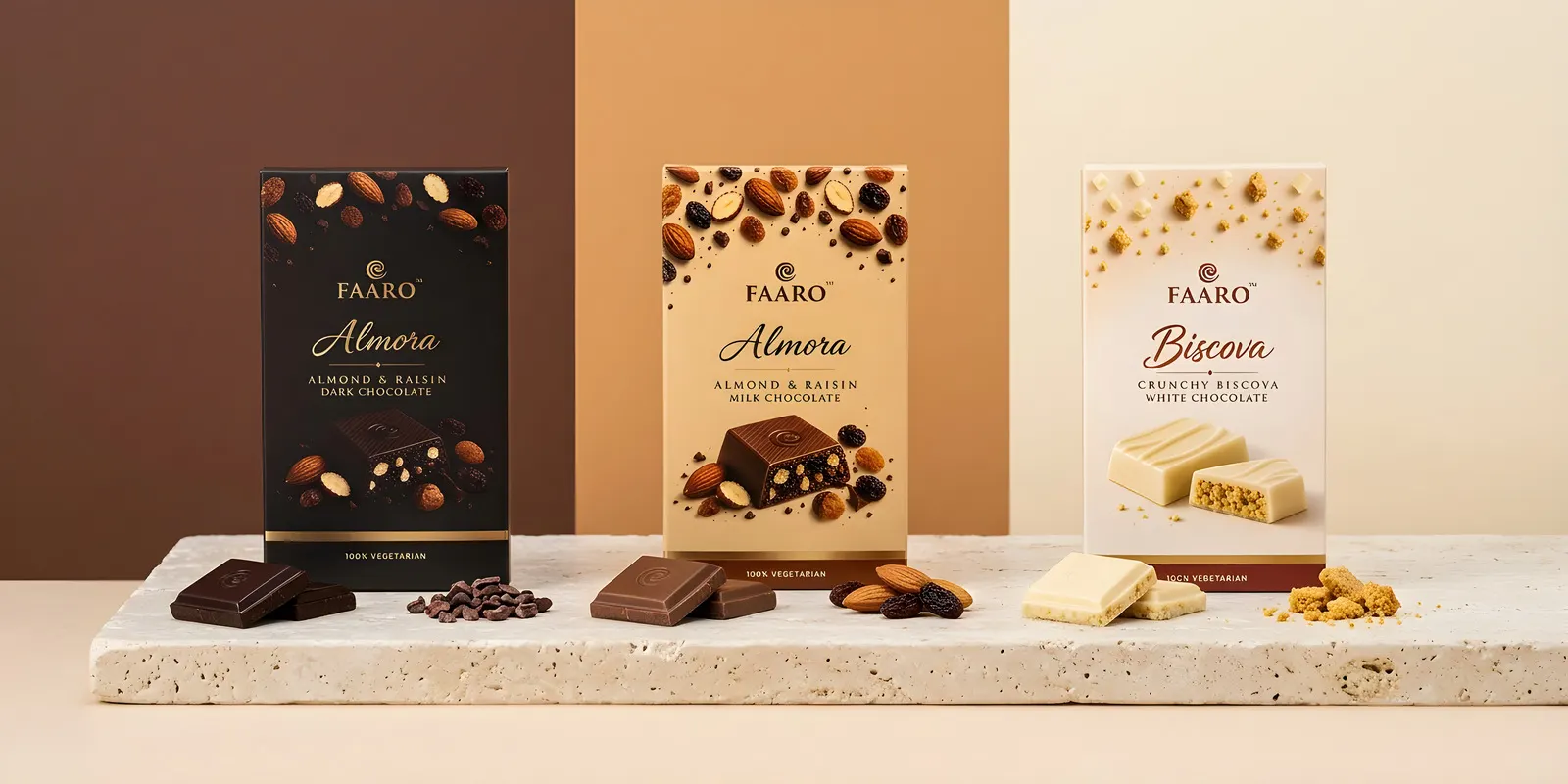
Standing in front of a shelf of chocolate bars and quietly unsure what the difference actually is? You are not alone. Milk, white and dark are the three great families of chocolate, and while most of us have a vague preference, surprisingly few people can say what really separates them — or which one suits a given moment. This is the friendly, no-jargon guide we wish someone had given us.
Every chocolate begins with the cocoa bean, which gives us two things: cocoa solids (the brown, intensely-flavoured part) and cocoa butter (the pale, smooth fat). What separates the three types of chocolate is simply how much of each they contain, and what else is added.
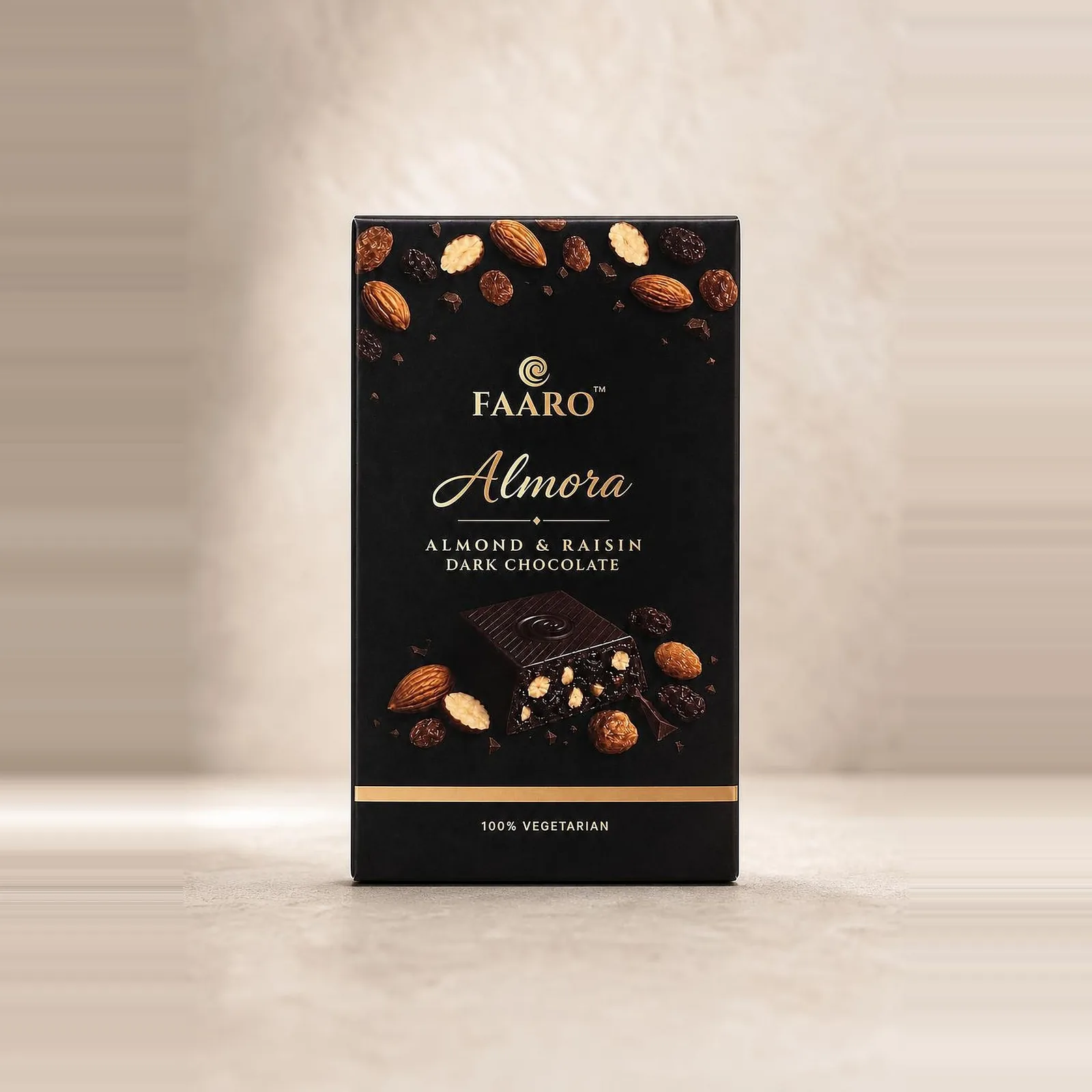
Dark chocolate is mostly cocoa solids and cocoa butter, with sugar and little or no milk. It is the most intense, least sweet, and most 'grown-up' of the three. The cocoa percentage tells you how bold it will be — 55% is gently bitter, 85% is seriously intense. It is also the type with the most discussed health credentials.
Milk chocolate adds milk solids and more sugar to the cocoa, producing the sweet, creamy, mellow bar that most people picture when they hear the word 'chocolate'. It is the most universally loved type — the safe choice for a gift, the one children reach for, the comfort bar. Its gentler flavour also makes it the perfect canvas for fillings: nuts, caramel, biscuit, pistachio.
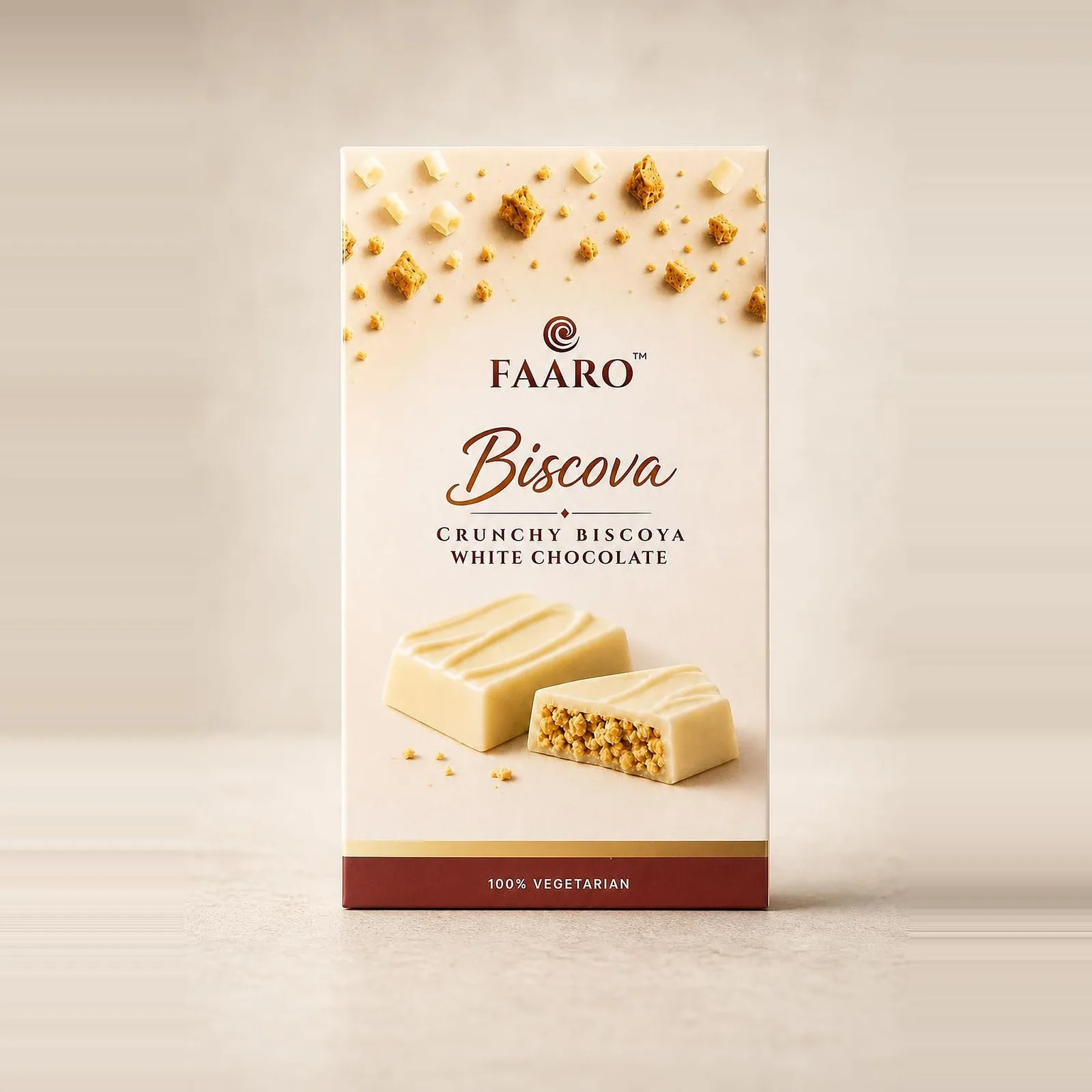
Here is the fact that surprises everyone: white chocolate contains no cocoa solids at all. It is made from cocoa butter, milk and sugar — which is why it is pale, intensely creamy, and very sweet, with a vanilla-and-dairy character rather than a cocoa one. Technically some purists argue about whether it counts as 'real' chocolate, but made well with genuine cocoa butter, it is a delight in its own right and a brilliant partner for biscuit and fruit flavours.
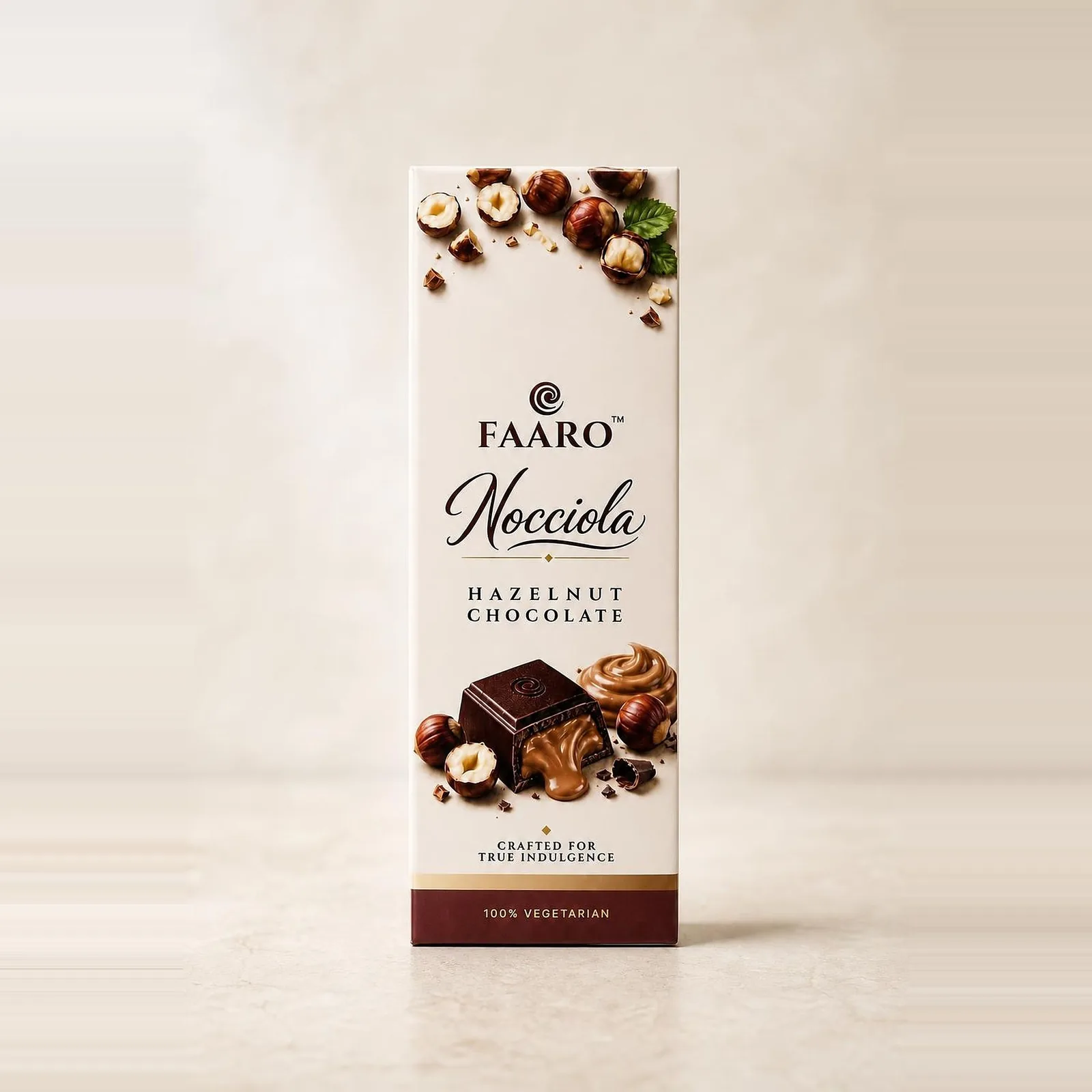
If you are new to premium chocolate, milk is the friendliest entry point — start with a filled milk bar like a hazelnut or a pistachio kunafa. If you already find most chocolate too sweet (many people who grew up on less-sweet South Indian desserts do), jump to dark — you will likely find it more satisfying. And if you have an unapologetic sweet tooth, white chocolate will feel like a treat designed just for you.
A great way to discover your type is a tasting trio: one milk, one white, one dark, sampled side by side with a strong filter coffee to cleanse the palate between each. Our guide to pairing chocolate with filter coffee shows you how.
There is no 'best' type — only the best one for you, for this moment, for this person you are gifting. Once you know how the three families differ, every shelf of chocolate becomes a lot less intimidating and a lot more fun. For where to take it next, see our guides to nut-loaded chocolate and the Lotus Biscoff craze.
Ready to find your type? Explore Faaro's full range across milk, white and dark. Free shipping on orders above Rs 499.
Dark chocolate is cocoa solids plus cocoa butter and sugar, with no milk. Milk chocolate adds milk solids, which makes it sweeter and softer in flavour. White chocolate contains cocoa butter, sugar and milk but no cocoa solids, so it has no cocoa colour or bitterness.
It depends on the definition you use. White chocolate contains cocoa butter, which comes from the cocoa bean, but none of the cocoa solids that give chocolate its colour and characteristic flavour. Most food regulators do classify it as chocolate provided it contains enough real cocoa butter.
It is the combined share of cocoa solids and cocoa butter by weight. A 70% bar is 70% cocoa-derived ingredients and roughly 30% sugar and other additions. Higher percentages mean less sugar and more bitterness, but quality depends far more on the beans and the roast than on the number.
Share this article
From The Range
Keep Reading
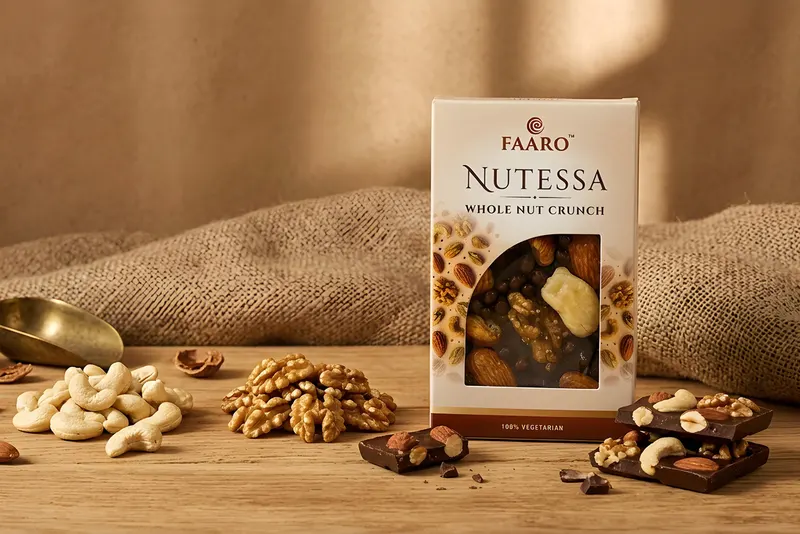
From cashew-crowned payasam to nut-packed chocolate bars — why nut-loaded chocolate feels like home to South Indian palates, and a tour of the nuts (and bars) worth knowing.
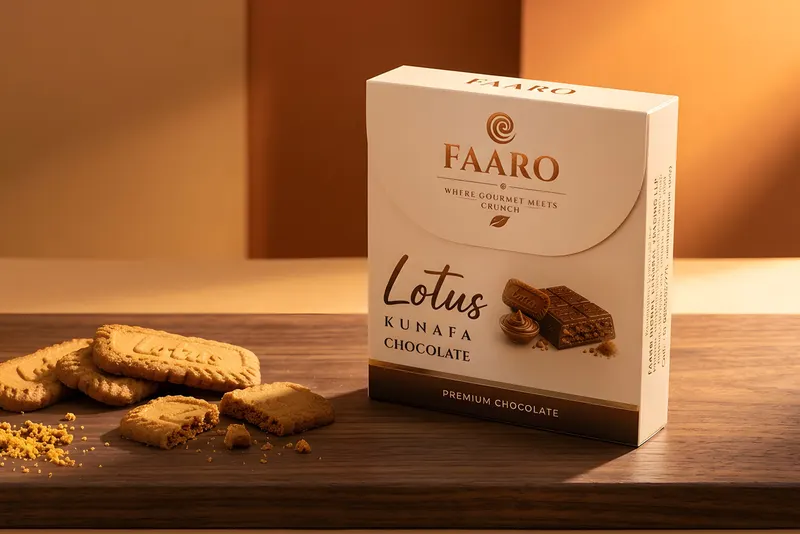
Caramelised-biscuit (Lotus Biscoff) chocolate is everywhere — here is what the flavour actually is, why young South India fell for it, and how to choose between milk and white versions.
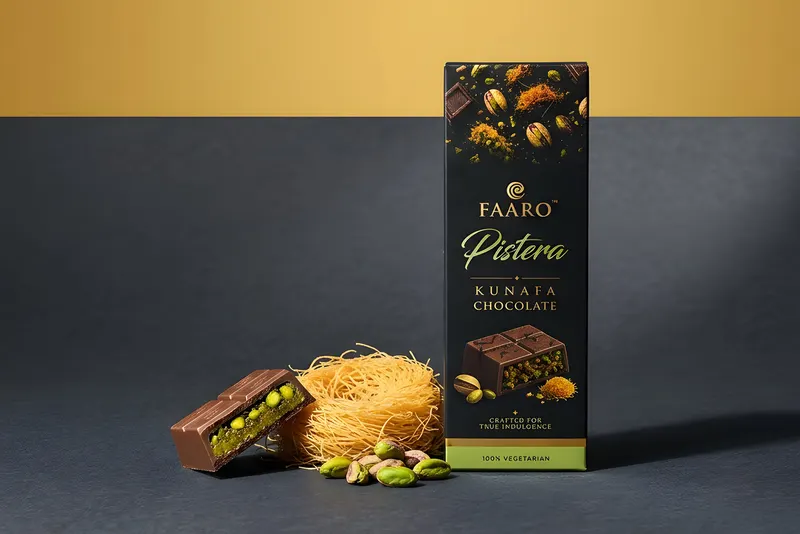
The viral pistachio-kunafa bar, explained — what Dubai chocolate is, why it exploded across South India, what it tastes like, and where to buy a proper one in India.
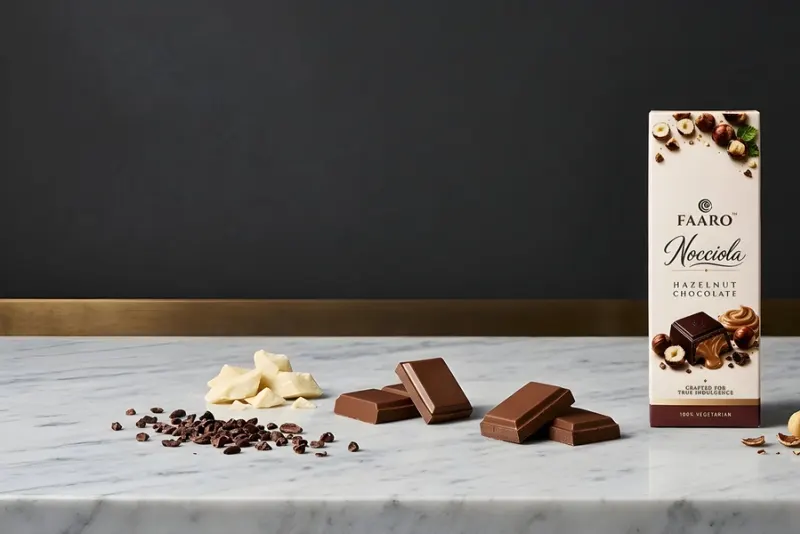
Couverture uses cocoa butter; compound uses vegetable fat. What FSSAI actually requires, six ways to tell the two apart on an Indian shelf, and how to read a chocolate label.