Loading…

A no-oven chocolate hazelnut tart that sets in the fridge — written for Indian 25% fresh cream, with the ganache ratio, the fixes for a split filling and make-ahead notes.

Faaro Editorial
Editor
Chocolate and hazelnut is not a modern invention, and it did not start as a luxury. It started as a shortage. When Napoleon's Continental System cut Europe's ports off from British shipping in 1806, cocoa became scarce and ruinously expensive in Turin — so the city's chocolate makers stretched what they had with the one thing Piedmont had plenty of: hazelnuts. Ground fine, the nuts behaved enough like cocoa to hold the mixture together. The result was gianduja, and two centuries later the pairing has outlived the blockade that caused it.
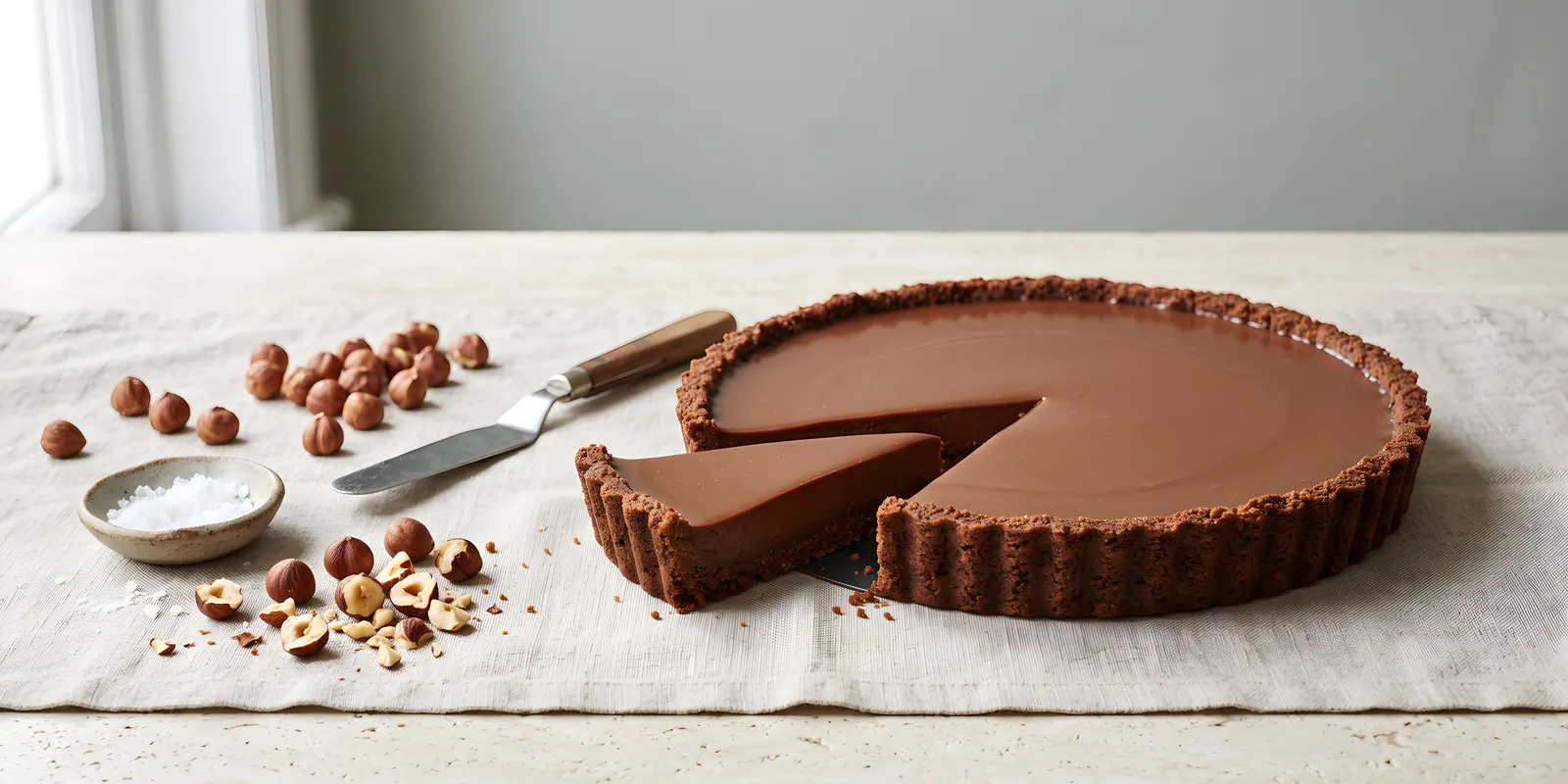
This tart is the least fussy way to put that pairing on a table. There is no oven, no pastry, no tempering and no thermometer — which matters, because a great many Indian kitchens do not have an oven and almost none of them have a cool room in April. It is a biscuit-crumb base, a set chocolate-hazelnut ganache, and a fridge.
It takes about half an hour of actual work, and the fridge does the rest.
Most chocolate tart recipes ask for plain chocolate and, if they want a nut flavour, a spoonful of nut paste stirred in at the end. That works, but it introduces a risk: nut pastes carry their own oil, and adding loose oil to an emulsion that is already at its limit is the most common way a ganache splits into a grainy, greasy mess.
Lightly grease a 20 cm loose-bottomed tart tin. Crush the biscuits to fine, even crumbs — a rolling pin and a sealed bag works as well as a processor. Stir in the melted butter and the fine salt until the mixture looks like wet sand and holds its shape when you squeeze a fistful.
Tip the crumbs into the tin. Press them firmly and evenly across the base and up the sides, using the flat bottom of a steel glass to compact them properly — a loose base crumbles under the knife. Chill for 30 minutes.
Chop the Nocciola bars and the dark chocolate small, hazelnut filling and all, and put them in a completely dry heatproof bowl. Any water at this stage will seize the chocolate.
Heat the cream in a small pan until it steams and small bubbles appear around the edge, about 80 °C. Do not let it boil. Pour it straight over the chopped chocolate so everything is submerged.
Leave it undisturbed for two minutes. Then stir slowly with a spatula, starting with small circles in the centre and widening outwards. It will look curdled before it comes together — keep going until it turns dark, thick and glossy.
Beat in the softened butter a little at a time until the ganache is smooth and shining. Let it cool for five minutes so it thickens slightly.
Share this article
From The Range
Keep Reading
Couverture uses cocoa butter; compound uses vegetable fat. What FSSAI actually requires, six ways to tell the two apart on an Indian shelf, and how to read a chocolate label.
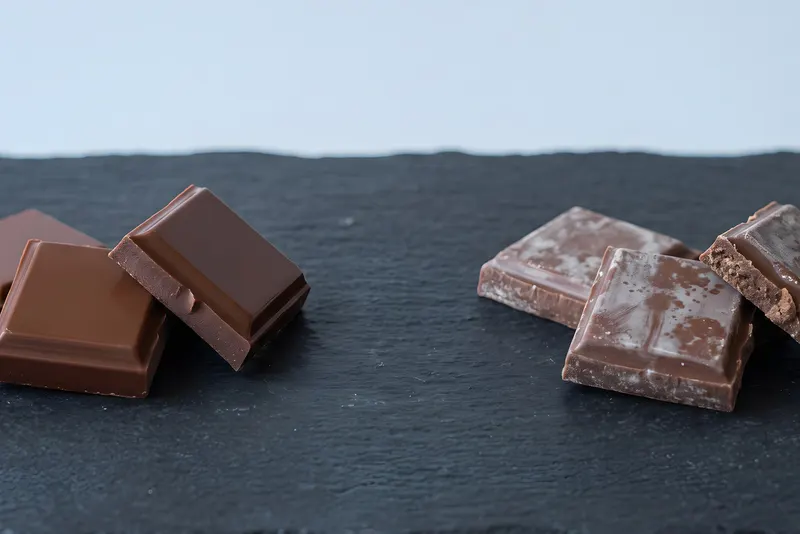
The white film on chocolate is bloom, not mould, and it is safe to eat. How to tell fat bloom from sugar bloom, why Indian heat causes both, and how to store chocolate properly.
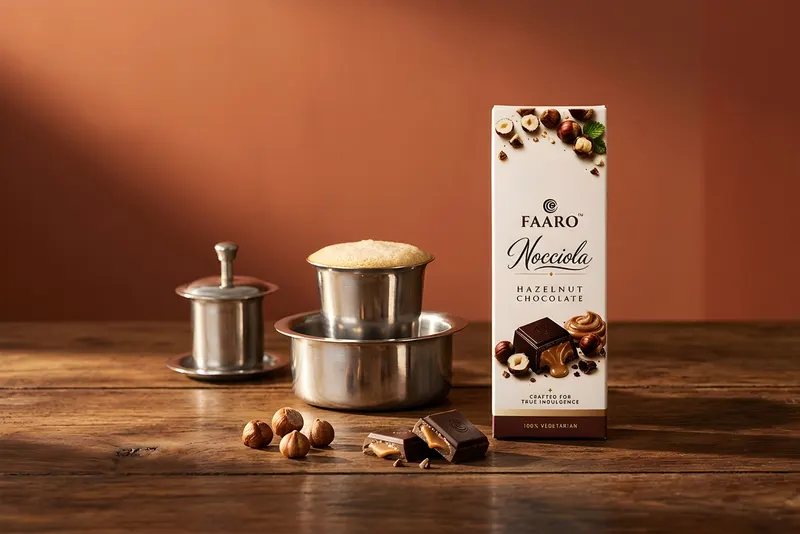
South Indian filter coffee is one of the finest partners chocolate could ask for. A bar-by-bar guide to pairing degree coffee with dark, hazelnut, white and pistachio chocolate.
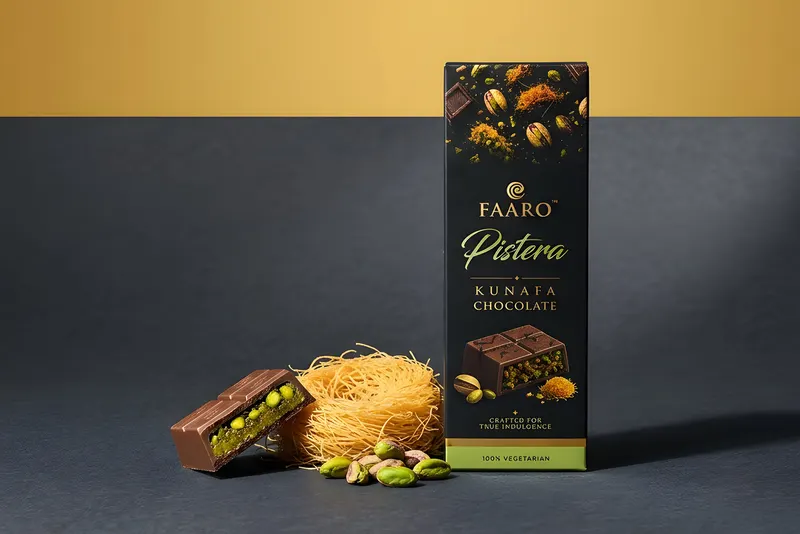
The viral pistachio-kunafa bar, explained — what Dubai chocolate is, why it exploded across South India, what it tastes like, and where to buy a proper one in India.
A filled hazelnut bar has solved that problem in a factory. The hazelnut is already blended into the chocolate as a stable emulsion, at a ratio someone else has tested. Melt it into warm cream and it behaves exactly like plain chocolate, while tasting of hazelnut all the way through rather than in patches.
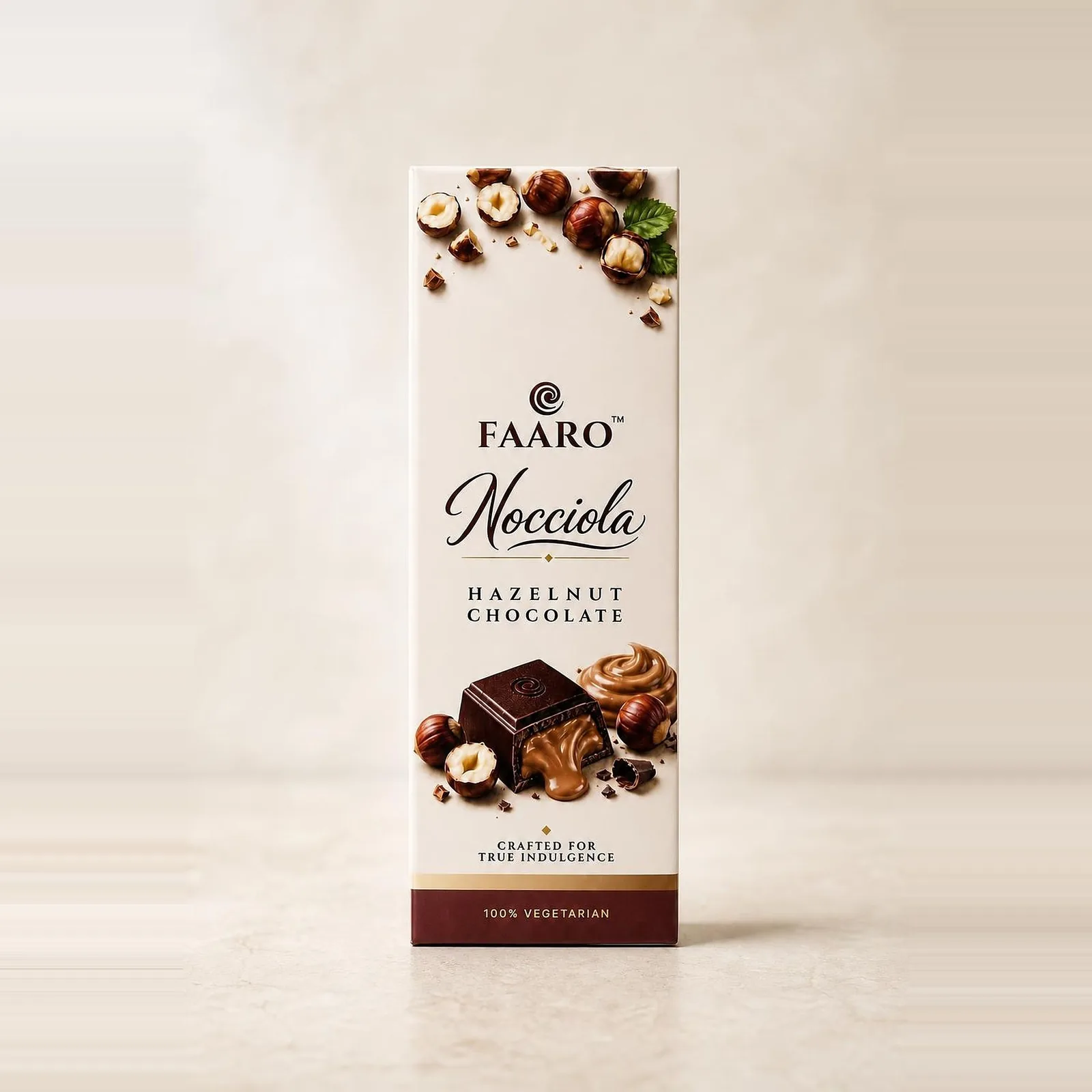
We use Nocciola, our 56 g bar of couverture milk chocolate around a roasted hazelnut filling. Four bars make one 20 cm tart. The dark chocolate in the ingredient list is not optional — milk chocolate alone sets too soft to slice, and the dark is what gives the filling its backbone and stops it tasting only of sugar.
This is the single detail that decides whether your tart sets. Most chocolate tart recipes on the internet are written for Western double or whipping cream, which is 35% to 48% fat. The carton labelled "fresh cream" in an Indian supermarket — the Amul one most kitchens reach for — is around 25% fat.
Less fat means more water, and water is what a ganache is least able to absorb. Use the quantity a British recipe asks for and you get a filling that is loose, dull and prone to weeping. So this recipe is written for 25% cream and compensates in three ways: a higher proportion of chocolate to cream, a slug of dark chocolate for structure, and butter beaten in at the end for gloss and firmness.
Not a drop of water may get into the melted chocolate — not from a wet bowl, not from steam off the cream pan. Chocolate seizes on contact with small amounts of water and turns instantly from glossy to a stiff, grainy paste. Dry every bowl and spatula before you start.
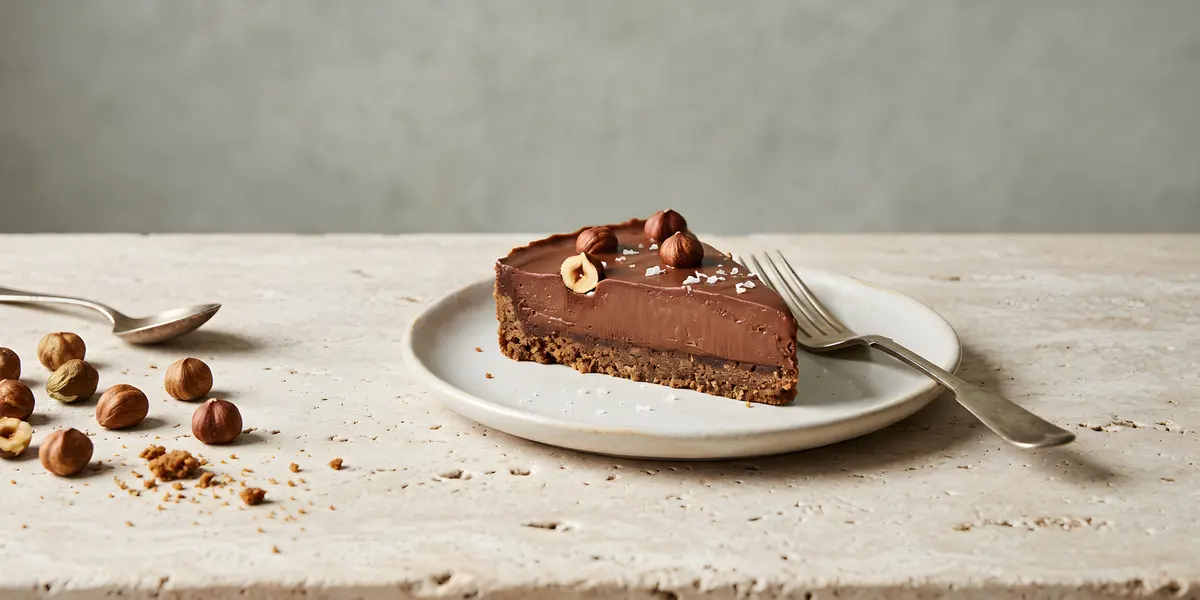
Take the tart out of the fridge 15 to 20 minutes before you serve it. Straight from the fridge, cocoa butter is fully solid and the filling reads as hard and muted; a quarter of an hour on the counter brings it to the point where it melts on the tongue instead.
If the tart's surface ever turns pale or streaky in storage, that is the cocoa butter and not spoilage — we explain it in why chocolate turns white.
For a pistachio version, start with what Dubai chocolate actually is, and if you want to serve the tart the South Indian way, filter coffee is the pairing — the bitterness cuts straight through the ganache.
Yes. This one is entirely no-bake: the biscuit-crumb base is bound with melted butter and set in the fridge rather than blind-baked, and the ganache filling sets on chilling. You need a fridge, a saucepan and a tart tin, and nothing else. It is the reason no-bake tarts are so well suited to Indian kitchens, where an oven is far from standard.
Use real chocolate made with cocoa butter rather than compound chocolate, because cocoa butter is what sets the filling firm enough to slice and gives it a clean melt. This recipe uses four 56 g Faaro Nocciola hazelnut bars plus 100 g of dark chocolate: the milk bars carry the hazelnut flavour, and the dark provides the structure that stops the filling setting too soft.
Almost always heat or water. Cream that was boiled rather than brought to a steam can break the emulsion, and even a few drops of water from a damp bowl will seize the chocolate into a stiff paste. To rescue a split ganache, whisk in a tablespoon of cold cream from the centre outwards, or blend it briefly with a stick blender held below the surface.
Four hours in the fridge for a full 20 cm tart, or about two hours followed by 30 minutes in the freezer if you are short of time. Individual tartlets set in roughly half that. Take the tart out 15 to 20 minutes before serving so the filling softens from firm to silky.
Yes, and this recipe is written for it. Amul fresh cream is about 25% fat against 35% or more for Western whipping and double creams, so it carries more water. The recipe compensates with a higher chocolate-to-cream ratio, a portion of dark chocolate for structure and butter beaten in at the end. If you use whipping or double cream instead, add about 20 ml more cream.
Four days in the fridge, loosely covered and kept away from strongly flavoured foods, since chocolate readily takes up smells. It does not freeze well: thawing draws condensation onto the surface, which dulls the finish and can leave a grainy sugar bloom. Make it up to two days ahead if you need to work in advance.
The ingredients are listed above and the method follows below. Read both once before you start — the whole thing hinges on two minutes of patience while the cream melts the chocolate.
Pour the filling into the chilled base and tap the tin gently on the counter a few times to level the surface and release trapped air. Chill for at least four hours, or two hours plus 30 minutes in the freezer.
Take the tart out 15 to 20 minutes before serving. Scatter the chopped hazelnuts and flaky salt over the top, unmould, and slice with a knife dipped in hot water and wiped completely dry between every cut.