Loading…

What a chocolate distributorship in India really costs, what margin it earns, which licences you need, and the ten questions to ask a brand before you sign.

Faaro Editorial
Editor
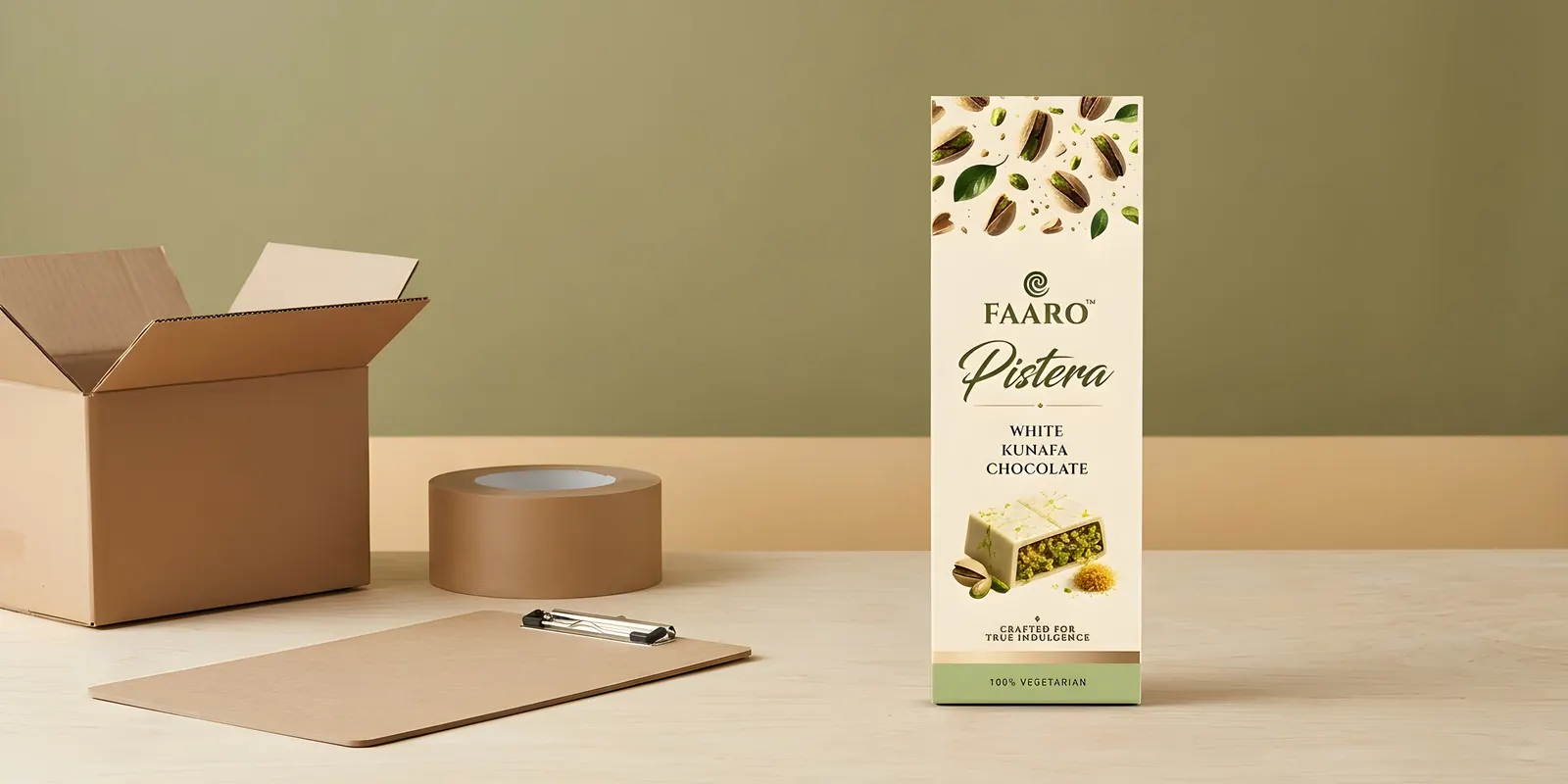
Chocolate is one of the few categories in Indian FMCG where a new distributor can still get a good territory. The market is growing at a healthy clip, the premium end is growing faster than the mass end, and the brands driving that premium growth are young enough that their distribution maps still have blank spaces on them. What they do not have is a queue of experienced distributors at the door.
This guide is for the person on the other side of that gap: someone weighing up whether to take a chocolate distributorship in India, and wanting real numbers before they commit. What it costs, what you actually earn, what licences you need, what makes chocolate harder than biscuits, and how to pitch a brand so they take you seriously.
These four words get used interchangeably in conversation and mean quite different things in a contract. Getting the distinction right is the first thing a brand will test you on.
If the numbers below look heavy for where you are today, the reseller route is the honest starting point, and we have written it up separately in how to start a chocolate reselling business in South India.
Investment in FMCG distribution scales with the size of the territory rather than with the category. Broadly, the Indian market sorts into three tiers.
New distributors budget for stock and vehicles and then get caught by the gap between paying the brand and being paid by their retailers. Most brands sell to a new distributor on advance or very short credit. Most retailers, meanwhile, pay on a cycle of anywhere from a fortnight to well over a month. That gap is funded entirely out of your pocket, every cycle, forever.
A commonly used rule of thumb across FMCG is to hold about 20% of your total budget as free cash purely to bridge that gap — separate from stock, separate from the vehicle, separate from the deposit. A distributor with ₹10 lakh of stock and no working capital is a distributor who stops ordering in month three.
Before you sign anything, ask the brand a single blunt question: what are your payment terms for a new distributor, and do they change after six months? A brand that will not answer that in writing is telling you something.
FMCG distributor margins in India generally sit between 5% and 8% net across the board. Premium snacking and confectionery tend to sit at the upper end of that band and sometimes above it, because the products are higher-priced, less price-sensitive and turn on impulse rather than on a shopping list. Categories with the healthiest distributor economics tend to combine a 6–10% margin with a working capital cycle of roughly 25–35 days.
The margin percentage on its own is meaningless, though, and this is where most first-time distributors misprice the opportunity. What matters is the margin multiplied by how many times your invested money comes back to you in a year.
A 6% margin on stock that turns twelve times a year returns far more on the same money than a 12% margin on stock that turns three times.
Which is why the right question to ask a chocolate brand is not "what is my margin?" but "what is the average days-on-shelf for your fastest SKU in a store like mine?" A pistachio kunafa bar that sells out in a fortnight is a better business than a slow premium box at twice the margin.
We have written the retailer's half of this maths — MOQ, shelf life, days-on-shelf and how to price a facing — in MOQ, margins and shelf life: the retailer's guide to stocking premium chocolate.
Chocolate is a packaged food, so the compliance list is short but non-negotiable. No credible brand will appoint a distributor who does not have these.
Distributors coming from staples, biscuits or beverages are often surprised by chocolate, and always by the same four things.
None of these are reasons to avoid the category — they are reasons to plan for it. The heat problem in particular is manageable and worth understanding properly; we cover the storage side in why chocolate turns white, and how to store it in Indian heat.
The brand you pick matters more than the tier you enter at. A strong brand at micro scale beats a weak one at district scale, because a weak brand's stock simply sits. Ten questions worth asking before you commit:
Ask for the contact details of one existing distributor and call them. A brand that is comfortable with that request is usually a brand worth signing with.
India's chocolate market is estimated at roughly USD 2.7 billion in 2026 and forecast to reach close to USD 4 billion by 2031. Two features of that growth matter to a distributor. First, the premium slice is growing faster than the mass market, and premium is where distributor margins are healthiest. Second, the fastest-growing route to the consumer is online and quick commerce — which sounds like a threat to distribution and is often the opposite, because quick-commerce dark stores need local stock and local restocking.
There is also a specific opening. The viral pistachio-kunafa format created a category of shoppers asking for a product by description rather than by brand, and most established players were slow to serve it. That is exactly the kind of gap a new distributor can build a territory on.
We have written the city-level view of that opportunity for Chennai, Bengaluru, Hyderabad and Kerala, and the category view in Dubai chocolate wholesale in South India.
Faaro is a South Indian chocolate brand manufacturing at our own facility in Kannur, Kerala. We supply distributors, retailers and HORECA across South India and beyond, and we appoint new territories continuously rather than in windows.
The next step is the distributor form on our distributors page. Tell us your territory, the outlets you cover and the categories you already carry, and you will get the full 30-page catalogue with wholesale pricing, MOQs and formats — and a reply with terms for your area. If you would rather ask questions first, get in touch and we will call you back.
Roughly ₹2–5 lakh for a single town or neighbourhood covering 50–150 outlets, ₹10–20 lakh for a district-level operation with a godown and delivery staff, and ₹50 lakh upward for a state-level super stockist. Around a fifth of whatever you commit should be held back as free working capital to bridge the gap between paying the brand and being paid by retailers.
FMCG distributor margins in India generally run between 5% and 8% net, with premium confectionery and snacking at the upper end of that range and occasionally above it. The percentage matters less than stock rotation: a 6% margin on stock that turns twelve times a year returns far more on the same capital than a 12% margin on stock that turns three times.
An FSSAI registration or licence in your own name, obtained through the FoSCoS portal, plus GST registration, a business registration such as a proprietorship or LLP, and a local trade or shops-and-establishment licence for your premises. Most brands will ask to see the FSSAI licence and the GSTIN before they will quote distributor pricing.
It can be, provided the territory is dense and the range turns. The two things that most often make it unprofitable are a scattered territory, where delivery cost per outlet eats the margin, and a slow-moving range, where capital sits in stock instead of returning. Premium chocolate helps on both counts because it sells on impulse and carries a higher margin per unit.
Fill in the distributor form on faaro.shop/distributors with your territory, the outlets you cover and the categories you already carry. That unlocks the full catalogue with wholesale pricing, MOQs and formats, and we come back with terms for your area. Faaro manufactures in Kannur, Kerala and supplies distributors, retailers and HORECA across South India and beyond.
Usually yes, as long as you are not carrying a directly competing chocolate brand in the same territory. Most appointments restrict competing lines rather than unrelated ones, and carrying complementary categories is often an advantage because it improves your beat economics. Confirm the exact restriction in writing before you sign.
Distribution rewards patience and punishes optimism. Get the territory tight, the working capital honest and the brand right, and chocolate is one of the better categories to be holding in India this decade.
Share this article
From The Range
Keep Reading
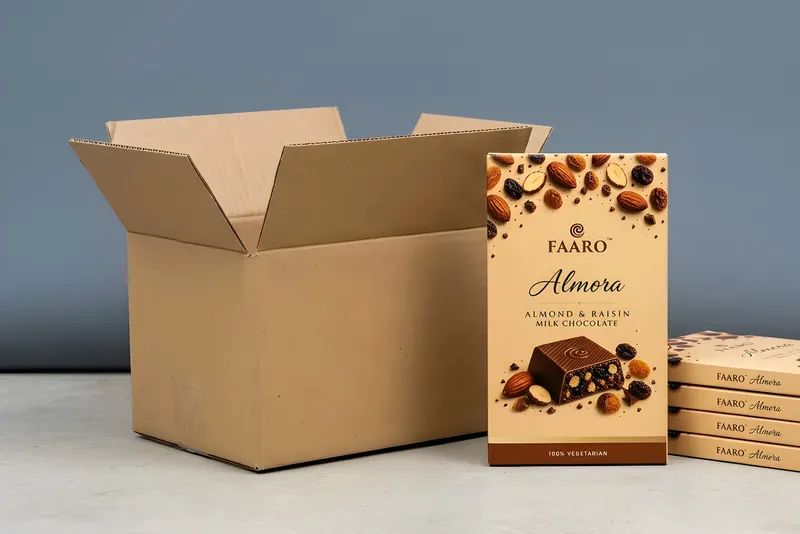
The three numbers that decide whether stocking chocolate makes you money: MOQ, margin and shelf life. A practical retailer's guide for South India — with Faaro as your supplier.
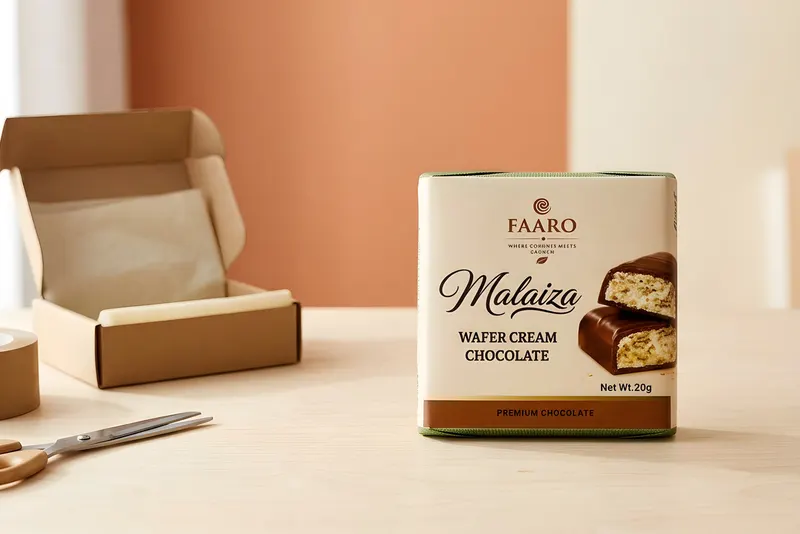
Want to resell chocolate in South India? A step-by-step 2026 guide to sourcing, MOQ, margins, GST, channels and the products that actually sell — with Faaro as your supplier.
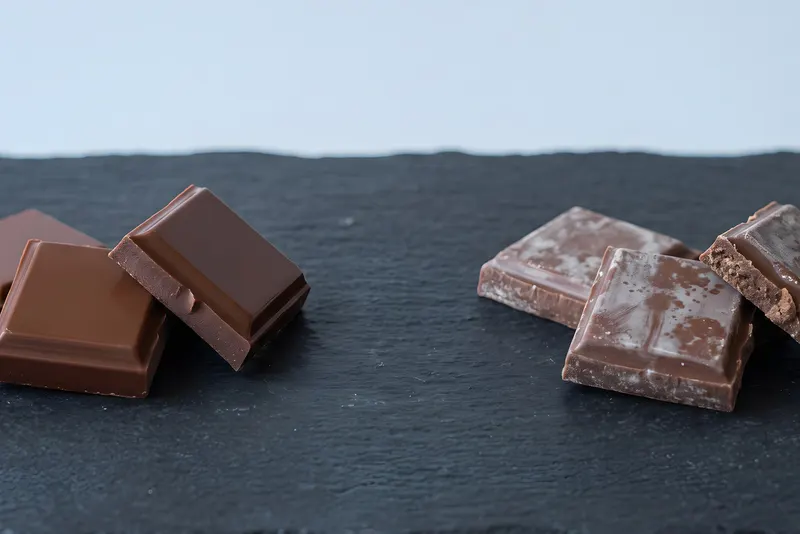
The white film on chocolate is bloom, not mould, and it is safe to eat. How to tell fat bloom from sugar bloom, why Indian heat causes both, and how to store chocolate properly.
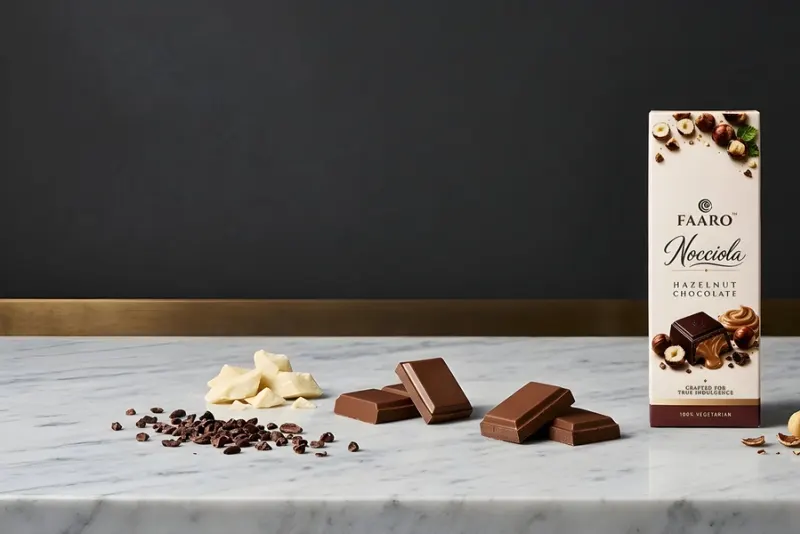
Couverture uses cocoa butter; compound uses vegetable fat. What FSSAI actually requires, six ways to tell the two apart on an Indian shelf, and how to read a chocolate label.