Loading…

How to choose Diwali chocolates that taste as good as they look: reading the label for real cocoa butter, flavours that suit the festive plate, how much to buy, and keeping chocolate perfect through Diwali week.

Faaro Editorial
Editor
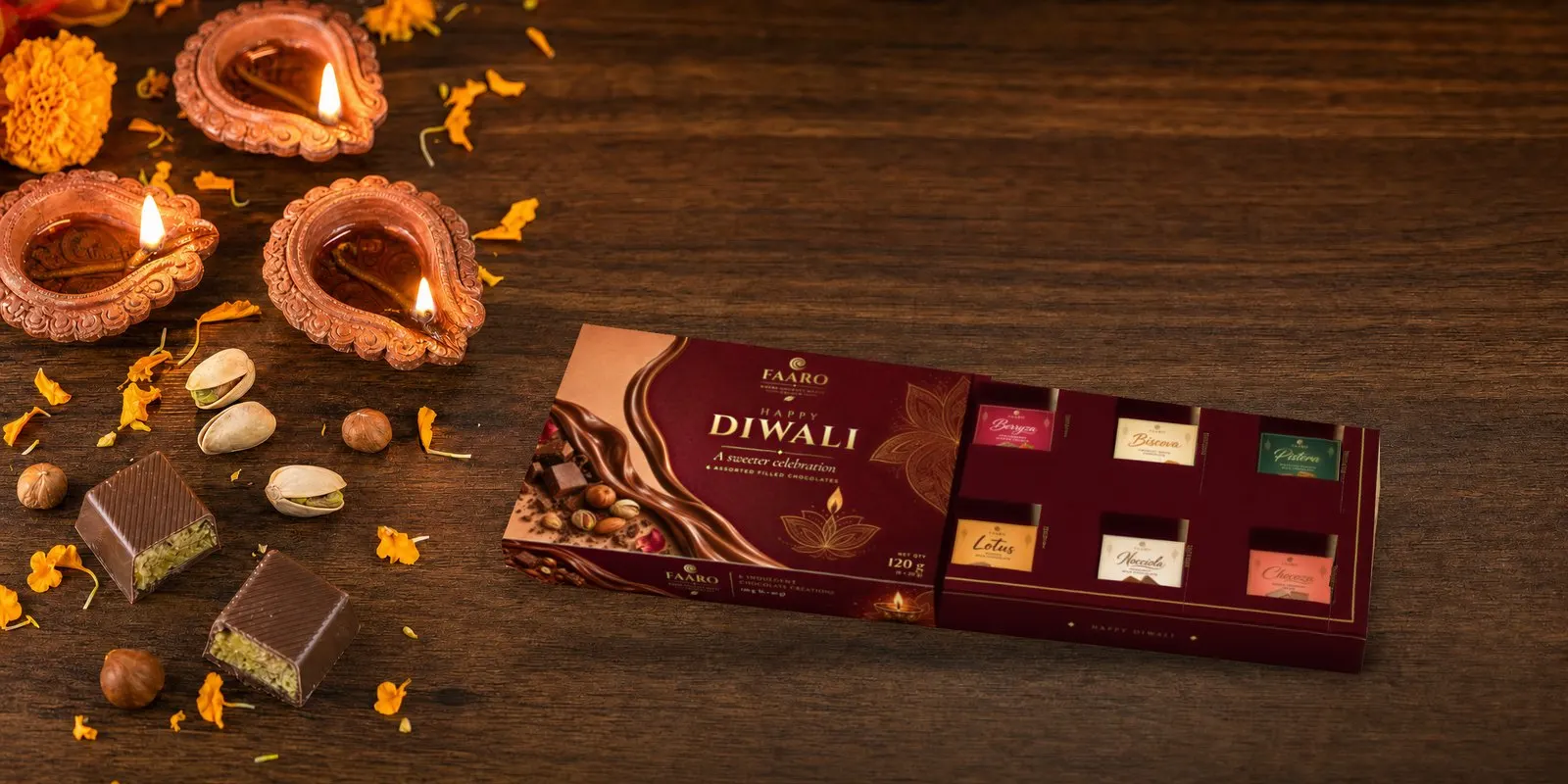
Every Diwali the same question arrives in the family group chat a week before the festival: what are we taking to everyone this year? For many households the answer now includes chocolate — usually beside a box of mithai rather than instead of it. This guide is about doing that well: how to tell real chocolate from the waxy kind, which flavours suit a festive table, how much to buy, and how to keep it perfect through a week of lamps, crackers and October heat.
Diwali has always been a festival of exchanging sweets, and it still is. What has changed is the box. Three practical things have moved chocolate onto the festive plate.
It is also simply the season when India gives. The US Department of Agriculture's New Delhi office estimates that Diwali accounts for 60–65 percent of the country's annual gifting sales, and the traders' body CAIT put Diwali 2025 trade at ₹6.05 lakh crore. Mithai remains the anchor of that exchange; a box of chocolate is now part of it.
None of this replaces mithai, and it should not. We have written about building a plate that has both in our Diwali chocolate hamper guide.
The single most useful thing you can do before buying Diwali chocolates is turn the box over. Two products can look identical on a shelf and be entirely different things inside.
Real chocolate uses cocoa butter as its fat. Under FSSAI's chocolate standard, a product sold as chocolate may contain vegetable fats other than cocoa butter only up to 5% of the finished product, and when it does, the label must say so in bold. Beyond that limit it cannot be sold as chocolate at all. A product built on cheaper vegetable fats instead is what the trade calls compound chocolate — easier to make and more forgiving in heat, but waxy, coating the mouth rather than melting cleanly.
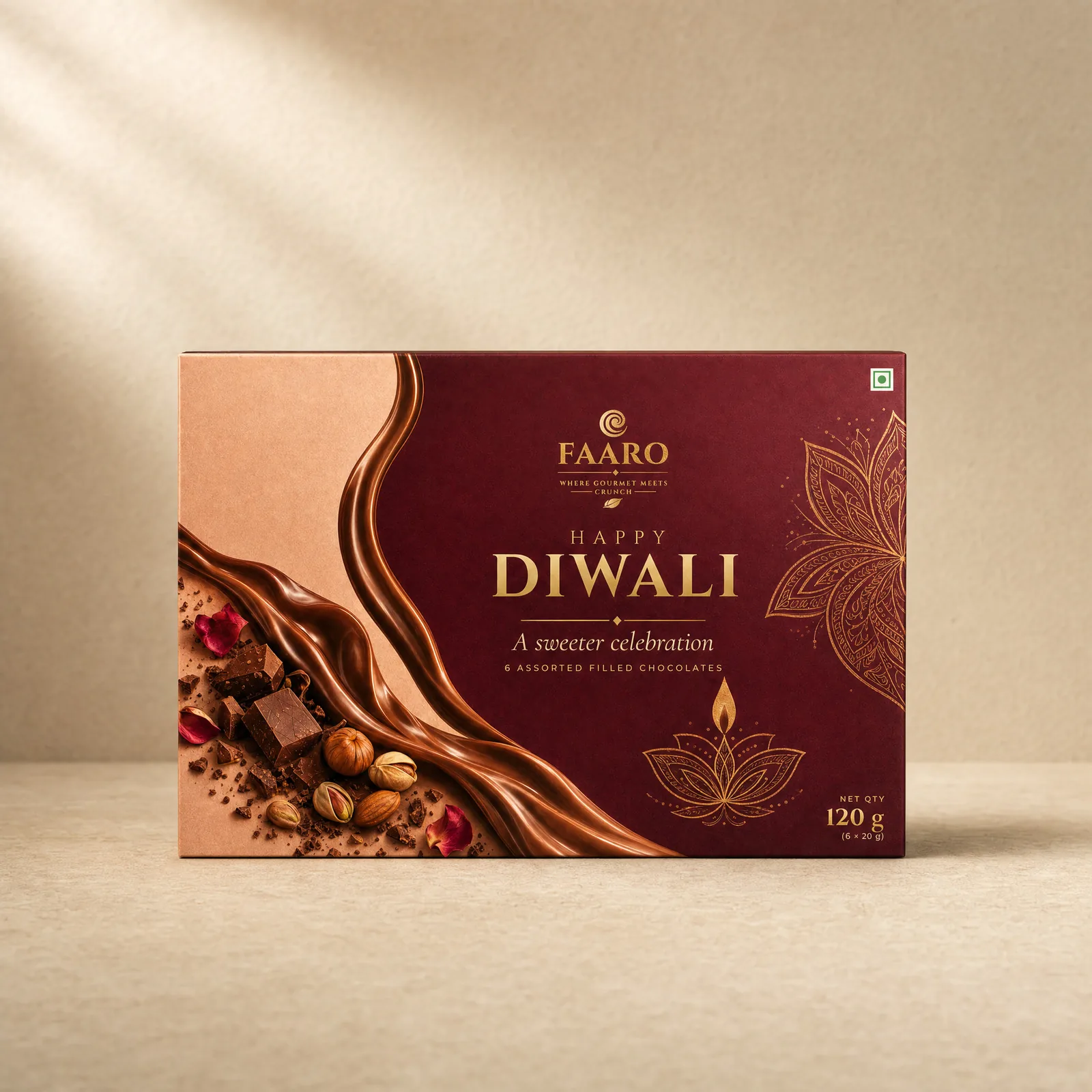
The full explanation — what FSSAI's standard actually says, and what "couverture" means on an Indian label — is in couverture vs compound chocolate. In the FAARO Diwali box, the chocolate in every piece is made with cocoa butter, never vegetable fat — the box's own ingredient declaration says so.
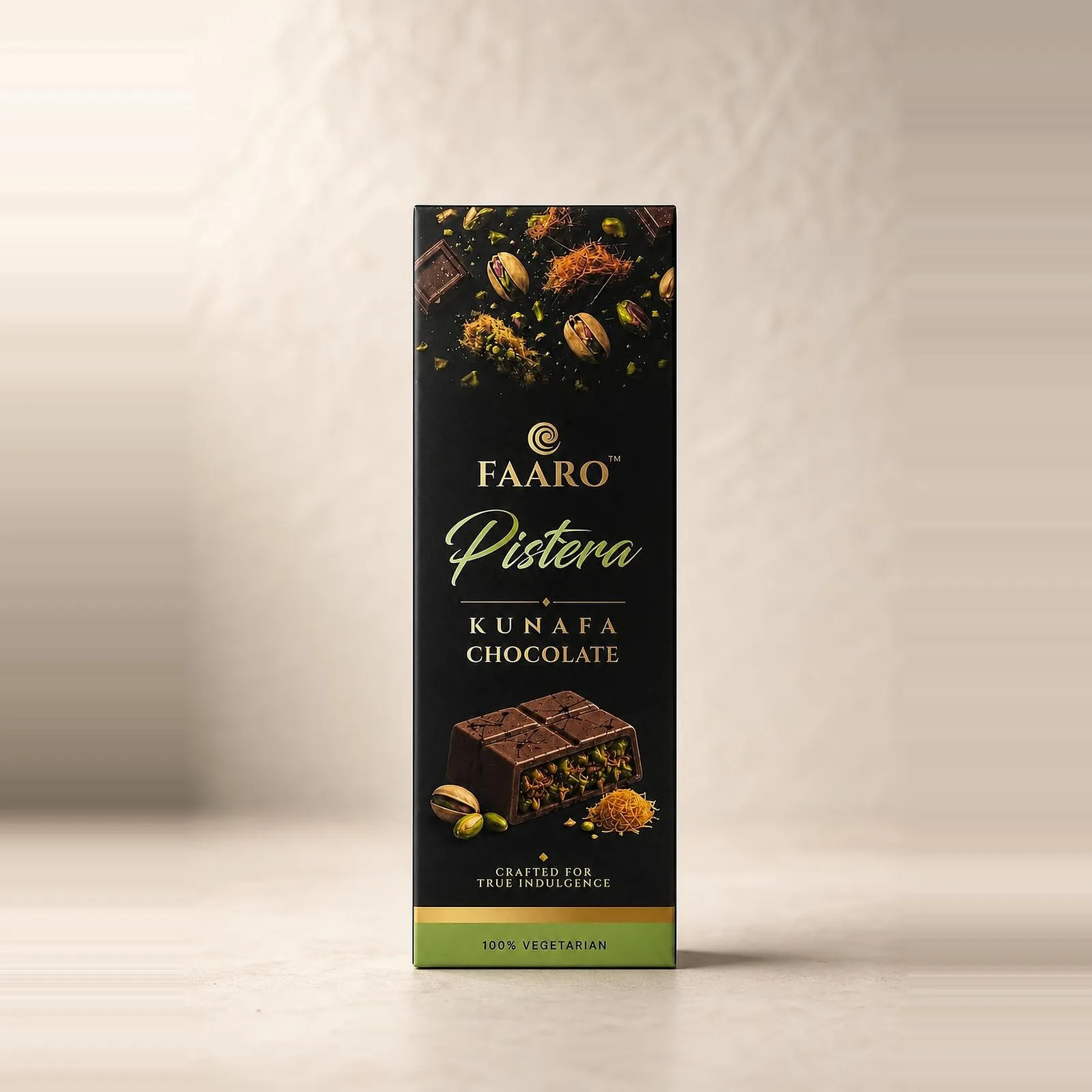
A festive assortment works best when it echoes the flavours people already love at Diwali — nuts, ghee-rich crunch, caramel and fruit — rather than fighting them. These are the flavours that go first on a festive table.
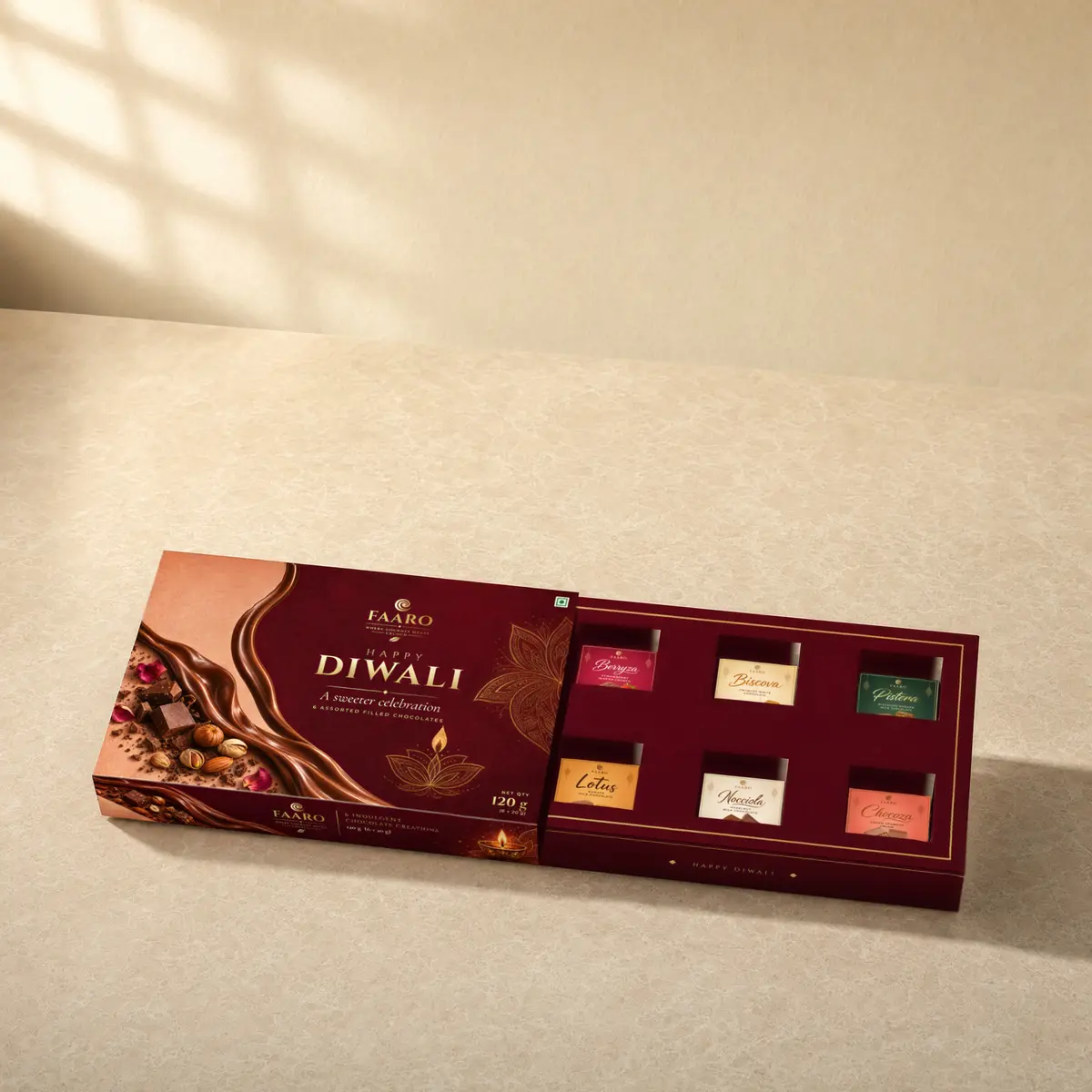
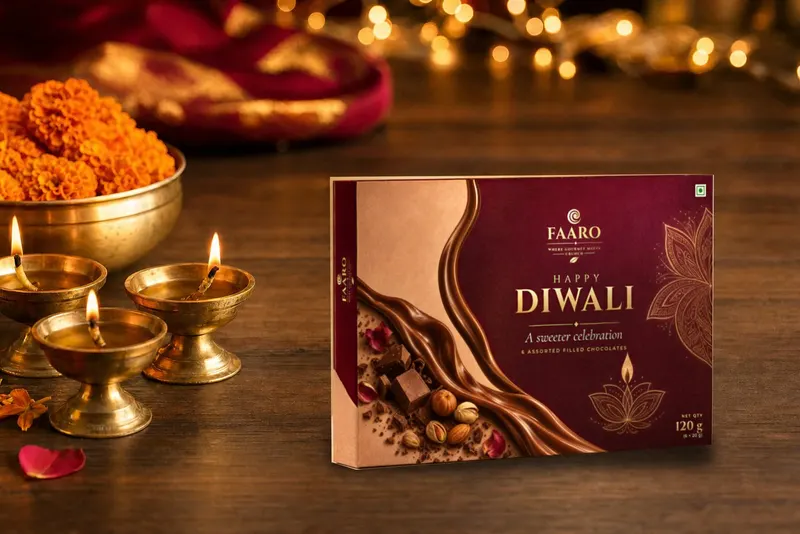
All six sit together in the FAARO Diwali gift box — one of each, 120 g in all — which is the simplest way to give the whole range in one go.
There is no rule, but a simple pattern works. Count households, not people, and split the list into three.
Write the list before you order, with a tick for who already has a box. It sounds obvious; it is also the only reliable way to avoid either running out on Choti Diwali or finding four boxes in a cupboard in December.
Chocolate's enemies are heat, humidity, light and strong smells. Callebaut, the Belgian couverture maker, recommends 12–18 °C; Valrhona says 16–20 °C, dry and away from light. In an Indian October or November that means the coolest closed cupboard in the house, not the counter.
If a bar does come out with a dull, whitish film, it is almost certainly bloom — cocoa butter or sugar that has moved to the surface after a temperature or humidity swing. It looks unappetising but it is safe to eat. Why it happens, and how to stop it, is in why chocolate turns white.
On a festive plate, chocolate works best as one more texture rather than the centrepiece. A few small habits make it shine.
The Faaro chocolates in the Diwali box are vegetarian. Because the pieces are filled with nut spreads, wafer and biscuit, the box contains milk, wheat, hazelnut and pistachio, and may contain soy, peanuts and traces of other nuts — so it is not a gift for anyone with a nut or gluten allergy. When in doubt, ask before you give; the full declaration is printed on every pack and on each product page.
Real chocolate made with cocoa butter, in an assortment of flavours that suit a festive table — pistachio, hazelnut, caramelised biscuit, nuts and raisins, and something sweet and simple for children. An assortment in a festive box works better than a single flavour because it suits a whole household. Check the ingredient list: vegetable fat in the chocolate means compound chocolate, not the real thing.
Sealed chocolate kept cool and dry lasts for months; the best-before date is printed on the pack. Filled chocolates with nut or biscuit centres taste freshest well within that date. Fresh milk sweets are different: FSSAI's guidance gives most of them one to four days.
Keep chocolate cool (roughly 15–20 °C), dry and dark, in a closed cupboard away from diyas, sunny windows and the stove, and sealed away from strong smells such as spices and incense. Never leave it in a parked car. If it develops a dull white film, that is bloom, and it is still safe to eat.
Generally no. Chocolate makers such as Callebaut advise against refrigeration because the fridge is humid and full of smells, and condensation causes sugar bloom. If your room is very hot, wrap the chocolate airtight, refrigerate it, and let it return to room temperature in its wrapping before opening.
Couverture is chocolate with a high proportion of cocoa butter, which is what makes it glossy, snappy and quick to melt on the tongue. Compound chocolate replaces some or all of the cocoa butter with cheaper vegetable fats, which makes it easier to handle in heat but gives it a waxy texture. In India, chocolate that contains vegetable fat other than cocoa butter has to declare it on the label.
Yes. Every piece in the FAARO Diwali gift box is vegetarian. The box contains milk, wheat, hazelnut and pistachio, and may contain soy, peanuts and traces of other nuts, so check with anyone who has a food allergy before giving it.
The FAARO Diwali gift box is ₹349 on faaro.shop. It holds six 20 g filled chocolates — Berryza, Biscova, Pistera, Lotus, Nocciola and Chocoza — 120 g in total, in a maroon-and-gold sleeve with a slide-out drawer.
Choose real chocolate, keep it cool, and give it with the same care as the sweets beside it. For help choosing a box rather than the chocolate inside it, see our Diwali gift box buying guide; for the dates of every day of the festival, see Diwali 2026: the date and the five days.
Share this article
From The Range
Keep Reading
A buyer's guide to Diwali gift boxes: the six questions every box should pass, mithai vs dry fruit vs chocolate boxes compared, how much to spend by relationship, and when to give.

Diwali 2026 is on Sunday, 8 November. Every date from Dhanteras to Bhai Dooj, why South Indian Deepavali falls on the same Sunday, the public holidays, and how the festival is celebrated across India.
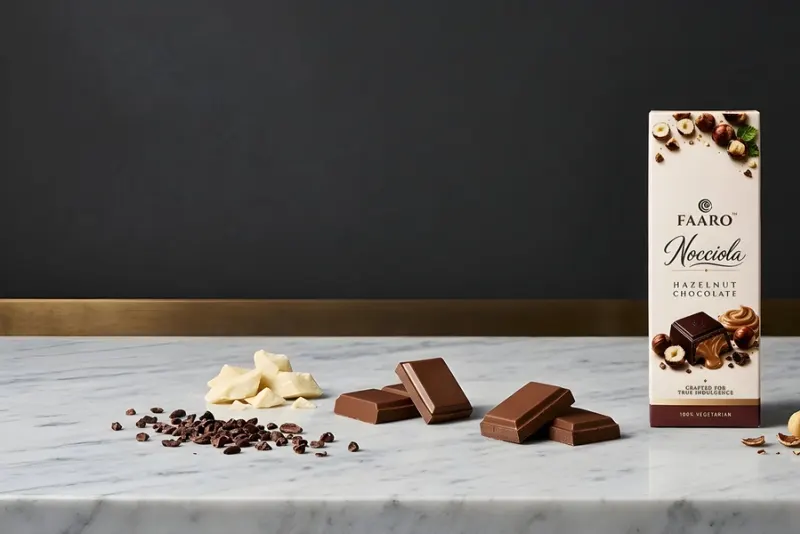
Couverture uses cocoa butter; compound uses vegetable fat. What FSSAI actually requires, six ways to tell the two apart on an Indian shelf, and how to read a chocolate label.
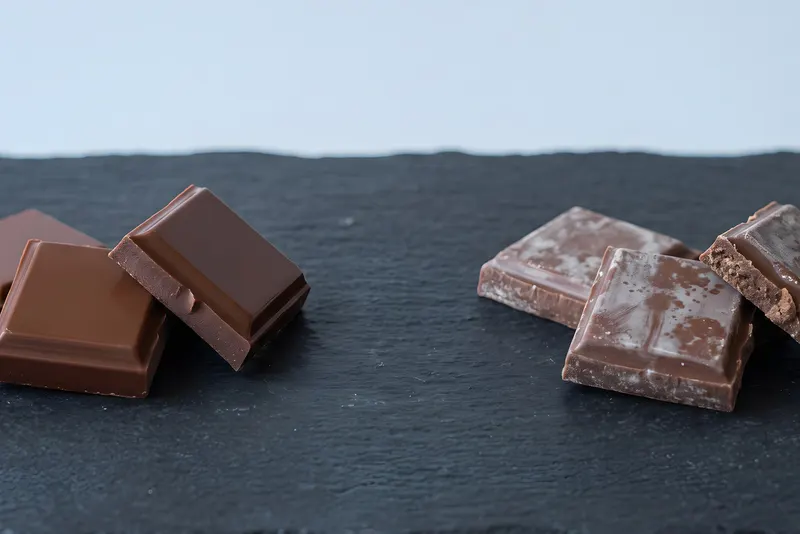
The white film on chocolate is bloom, not mould, and it is safe to eat. How to tell fat bloom from sugar bloom, why Indian heat causes both, and how to store chocolate properly.