
What Exactly Is in Kerala Mixture? A Complete Guide to South India's Favourite Snack Medley
A proper Kerala mixture is an orchestra of textures and flavours. Here is what goes in, why each component matters, and how to tell good mixture from ordinary.

Faaro Editorial
Editor
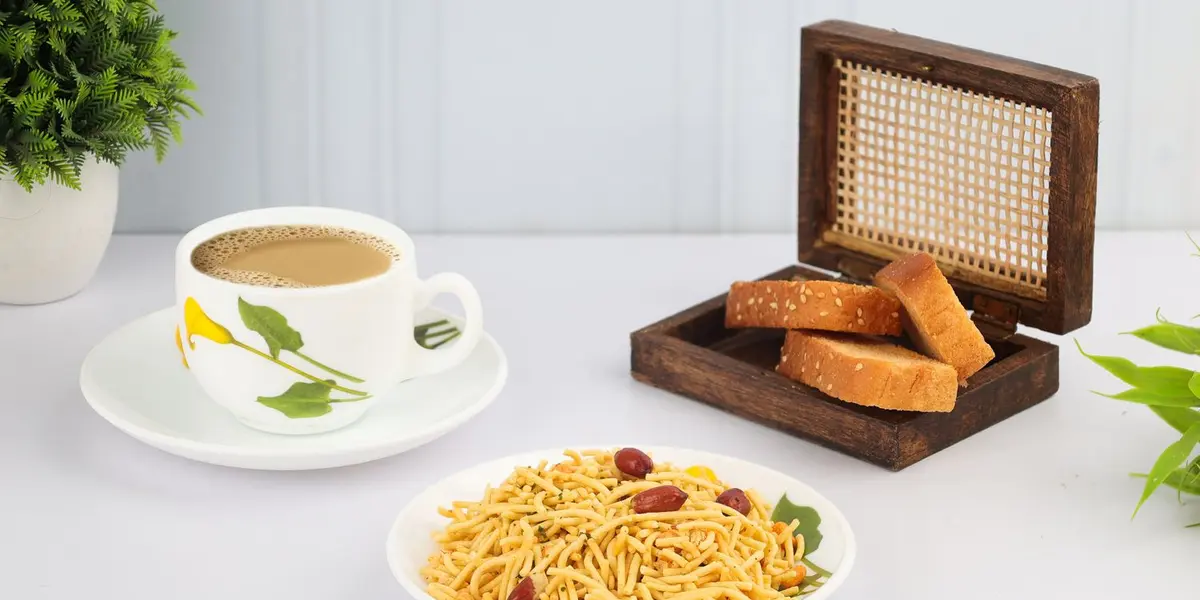
Open any steel dabba in a Kerala home and you will likely find one of two things: banana chips or mixture. And while banana chips are straightforward — one ingredient, one technique — mixture is an orchestra. Every component plays a different note, and the magic is in how they come together.
We have written about the history and craft of banana chips and the ancient tradition of murukku. Mixture is where these traditions collide — a snack that borrows from every corner of South Indian snacking and combines them into something greater than the sum of its parts.
What Exactly Goes into Kerala Mixture?
A proper South Indian mixture is not a random assortment of fried things. Each component is chosen for what it adds — crunch, spice, sweetness, texture, or aromatics. Here is the anatomy:
Sev / Oma Podi: Thin chickpea flour noodles, often flavoured with ajwain (omam). These provide the base texture — light, crispy, and slightly savoury. They absorb spice well and fill the gaps between larger components.
Kara Boondhi: Tiny spheres of chickpea flour batter, deep-fried and tossed with chilli powder and curry leaves. Boondhi adds a uniform crunch and carries the spice heat of the mixture.
Thenkuzhal / Murukku Pieces: Broken pieces of small murukku, adding a denser, more substantial crunch. The rice flour and urad dal base gives these pieces a different flavour profile from the chickpea-based components.
Roasted Peanuts: The protein and fat component. Good peanuts add a sweet, nutty richness that balances the spice. Bad peanuts ruin the whole mixture. Quality matters here more than anywhere else.
Roasted Chana Dal: Split chickpeas, roasted until golden. These add a gentle nuttiness and satisfying bite. They also absorb the spice coating and carry flavour deep into each handful.
Curry Leaves: Deep-fried until crisp and translucent. Curry leaves are the aromatic soul of the mixture. They shatter when you bite into them, releasing a burst of fragrance that ties everything together.
Dried Red Chillies: Broken into small pieces and fried. These provide bursts of localised heat — you bite into one and it wakes up your palate. The best mixtures use Guntur or Byadgi chillies for colour and warmth without overwhelming heat.
The Ratio: Where Every Maker Differs
Ask ten Kerala households for their mixture recipe and you will get ten different ratios. This is where mixture becomes personal.
- Some families go heavy on the sev, creating a lighter, airier mixture
- Others load up on peanuts and chana dal, making it denser and more filling
- Spice levels vary wildly — from mild enough for children to eye-watering heat
- Some add a pinch of sugar to the spice coating for a sweet-heat balance
- The proportion of curry leaves is often the signature of a specific household or shop
At its best, mixture is a conversation between textures and flavours. Every handful should taste slightly different from the last, because the ratio of components in each grab is never exactly the same. That randomness is the point.
Kerala Mixture vs Bombay Mix: What Is the Difference?
If you are familiar with 'Bombay mix' — the version sold in UK supermarkets and international markets — you might wonder how it relates to the original.
Bombay mix is essentially a simplified, mass-produced descendant of South Indian mixture. The key differences:
- Oil: Traditional Kerala mixture is fried in coconut oil. Bombay mix typically uses refined vegetable oil.
- Freshness: Kerala mixture is ideally consumed within a week of making. Bombay mix is manufactured for months of shelf life, requiring preservatives and different oil choices.
- Curry leaves: Essential in the original. Often missing or minimal in Bombay mix.
- Spice profile: Kerala mixture uses fresh-ground spices and whole chillies. Bombay mix often relies on spice powders and flavour enhancers.
- Texture variety: A good Kerala mixture has 6 to 8 distinct components. Mass-market versions often simplify to 3 or 4.
When Do You Eat Mixture?
The honest answer: anytime. But there are specific moments when mixture is particularly essential.
4 PM chai time: This is the primary use case. A small bowl of mixture alongside a cup of strong tea is the default South Indian afternoon ritual. We explore more pairings in our chai-time snack pairing guide.
Festival snack boxes: During Diwali, Onam, and Vishu, mixture is one of the standard items in every household's snack rotation, alongside banana chips and murukku.
Unexpected guests: When someone arrives unannounced, the steel dabba of mixture comes out before the tea is even put on. It is the universal South Indian gesture of hospitality.
Travel companion: Mixture packs well and travels better. It is the snack that appears on every Indian train journey, road trip, and packed lunch.
How to Judge Good Mixture
Not all mixture is created equal. Here is how to tell the good from the ordinary:
- Freshness: Good mixture smells fragrant and snaps when you bite. Stale mixture tastes oily and bends instead of breaking.
- Oil quality: Coconut oil mixture has a distinct golden colour and nutty aroma. Palm oil mixture looks paler and has a neutral smell.
- Component variety: Count the distinct items. Fewer than five components suggests a simplified, mass-market product.
- Curry leaf presence: Abundant, crispy curry leaves are a sign of care. They are expensive and time-consuming to fry properly.
- Spice coating: The spice should coat every piece evenly. Clumps of powder at the bottom of the bag suggest hasty mixing.
The Faaro Mixture Philosophy
Our mixture follows the philosophy behind everything we make: real ingredients, traditional technique, no shortcuts. Cold-pressed coconut oil. Fresh curry leaves fried until they shatter. Real peanuts, not the cheapest available. And a spice ratio that balances heat, warmth, and aroma.
It is mixture the way it is supposed to taste — the way it tastes when someone's grandmother makes it for Diwali, only available all year round.
Explore our full collection of handcrafted South Indian snacks. Every item is made with the same commitment to tradition and honest ingredients.
Share this article
Related Articles

Malabar Banana Chips: The 2,000-Year-Old Snack That Kerala Gave the World
From ancient Roman frying techniques to Kerala's coconut oil kitchens. discover the rich history, tradition, and craft behind Malabar banana chips.
9 min read
Murukku: The 700-Year-Old Twisted Snack That Brings Families Together
From 13th-century Tamil texts to your Diwali snack box. Discover the history, technique, and regional variations of India's most iconic twisted snack.
6 min read